7 Cable Cover Tips for Choosing the Right One
Loose cables can turn a tidy room into a trip hazard. They may run beneath a desk, across a hallway, or beside a busy workbench. A suitable cable cover can protect wires and make these routes easier to notice. But the right choice depends on more than appearance.
Consider where the cover will sit and what it needs to protect. A low-profile model may suit a carpeted home office, while a heavier-duty cover may be more appropriate for frequent foot traffic. Check the number and thickness of your cables, the surface beneath them, and whether people will cross the route often. A cover that is too narrow can pinch cables; one that shifts underfoot can create a new problem. Small details matter.
This guide shares seven practical tips for choosing a cable cover, from material and capacity to installation and maintenance. It also considers visibility, floor compatibility, and how easily the cover can be opened when cables need attention. No single option fits every room. That is worth remembering. A tidy-looking cover may still be awkward to clean, or poorly suited to a doorway. Compare product specifications with your actual setup, and check the manufacturer’s guidance before installation. A little measuring now can prevent a frustrating refit later.
Identify Where the Cable Cover Will Be Used
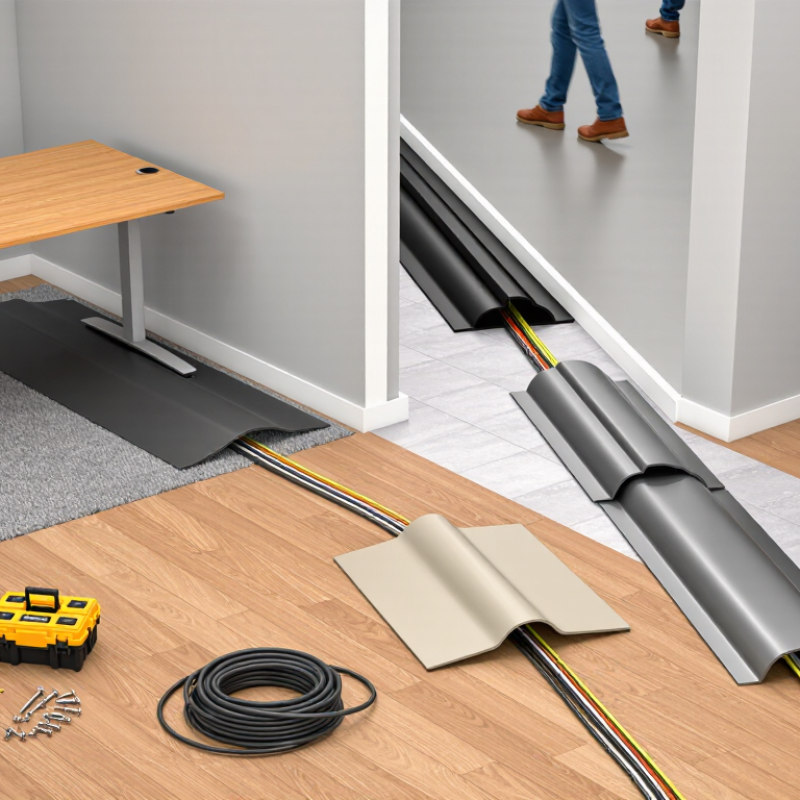
Identify the cable cover’s location before comparing materials. A cover across a quiet office floor faces different demands from one in a warehouse aisle. The U.S. Bureau of Labor Statistics reported 2.6 million nonfatal injury and illness cases in private industry in 2023. That figure is not specific to cable-related trips, but it underscores why busy walking routes deserve careful attention. Note foot traffic, cleaning methods, moisture, and whether carts or chairs cross the cable.
Match the cover to the floor, too. Adhesive-backed products may suit clean, smooth surfaces, while uneven concrete can leave gaps that collect dirt or shift underfoot. Measure the cable bundle, then leave enough room to close the cover without pinching wires. OSHA’s walking-working-surface rules call for orderly, maintained walking areas; a cover should support that aim, not become another obstacle. It is easy to overfocus on appearance. A neat-looking cover can still be wrong for a damp entryway or a route crossed by rolling carts.
Measure Cable Volume and Required Coverage
Measure the cable bundle before choosing a cover. Count every cable, then measure its outside diameter, including insulation. A bundle of six 6 mm cables occupies about 170 mm² in cross-sectional area, before allowing room for movement or heat. Small gaps matter. Measure the widest point, not just the neatest section.
For a quick reference, NFPA 70 (2023), Chapter 9, Table 1, limits conduit fill to 40% when more than two conductors are installed. That rule applies to conduit, not directly to surface cable covers, so treat it as a cautious planning benchmark—not a cover specification. Check the cover’s internal width and height, and leave space for cables to sit without being crushed. I still recheck the fit with a sample bundle; cables rarely lie as evenly as the drawing suggests.
Measure the full route, including corners, doorways, and transitions, then add enough length for those details. A cover that fits the straight run may fail at a tight turn. Verify the product’s stated capacity and bend guidance, especially where power and data cables share a path. If the bundle may grow, allow spare space now. Don’t pack it tight.
Compare Materials, Durability, and Load Ratings
Cable covers differ in flexibility, wear resistance, and suitability for specific spaces. A rubber cover can grip concrete and handle repeated foot traffic, but its weight may make frequent repositioning awkward. Flexible PVC is often lighter and easier to route around corners. Rigid covers can protect cables from knocks, though they may sit poorly on uneven floors. Outdoors, check whether the material resists sunlight, moisture, and temperature changes.
Read the load rating carefully. A rating may describe a static load, a moving wheel load, or the capacity of the entire cover. Those figures are not interchangeable. A vehicle passing over a cover creates different stress from a person standing on it. For carts or vehicles, compare the stated rating with the expected wheel load, and leave a margin rather than choosing the closest number. Not every rating tells the whole story.
Match the cover’s channel size to the cable bundle without forcing wires into a tight fit. Check the underside for a stable base, and inspect hinges or joints for cracking after regular use. A low-profile cover may reduce tripping risk, but only if it still protects the cables adequately. I would reconsider any choice based on material alone; placement and traffic matter just as much. Small details matter.
Choose a Suitable Profile and Installation Method
A cable cover should match the cable bundle and the space around it. Measure the cables together, including any plugs or connectors that must pass beneath the cover. A low, gently sloped profile is often easier to cross in a doorway or walkway. Larger bundles may need a taller channel, but that can create a more noticeable bump. I still find this trade-off easy to misjudge: measure the actual route, not just the straight section.
Tip: Check the cover’s channel dimensions and capacity before buying. Leave a little room for cables to sit without being squeezed, and choose a color that makes the edge visible against the floor. For frequent access, a hinged or removable top can be more practical than a fully fixed cover.
Match the installation method to the surface and expected traffic. Adhesive backing can work on a clean, smooth floor, but dust or textured finishes may weaken the bond. Screws can provide firmer attachment where the surface allows them; check the maker’s instructions before drilling. Dry-fit the cover first, mark the route, and make sure doors open freely. Keep turns gentle. A tight bend can make cables harder to place and remove.
After installation, walk across the route and check that the cover stays flat and does not shift.
Check Safety, Accessibility, and Maintenance Needs
Trace where people walk, turn, and carry objects. Note doorways, chair legs, and wet entryways. Choose a cover wide enough to hold the cables without forcing tight bends. Check its load rating and grip. A light-duty cover may not suit carts or frequent wheelchair use. Edges should sit flat, without curling or rocking. Small detail, big risk.
Accessibility depends on the route, not just the product. A raised ridge can catch a cane tip. It may also make a doorway awkward for a wheelchair. Compare the installed height with nearby thresholds, and test the path using the mobility devices people actually use. High contrast can make a crossing easier to spot, while glossy surfaces may glare under overhead lights. Keep exits and controls reachable.
Plan for cleaning before buying. Dust and grit collect in seams, while adhesive-backed covers can loosen on textured floors. Liftable designs make cable checks easier, but only if they close securely afterward. Inspect after moving furniture or whenever a cover shifts. Look for cracked edges, exposed wires, trapped moisture, or heat discoloration. Don’t ignore warmth. If a cable or cover feels unusually hot, stop using the setup when safe. Ask a qualified electrician to assess it. A cover is not a substitute for proper wiring protection.
Use this checklist to compare cable covers for your setting. Counts show the number of questions in each topic, not ratings or test results. Check that the cover suits the cable route, foot or vehicle traffic, access needs, and cleaning routine.
Related Posts
-
How to Choose the Best Cable Cover for Your Needs
-
2026 Best Cable Ducting Solutions for Your Home and Office?
-
Top 10 Cable Hider Solutions for a Clutter Free Home?
-
2026 Top Cable Cover Options for Your Home and Office Needs?
-
Top 10 Duct Cable Types How to Choose the Right One?
-
10 Essential Tips for Choosing the Best Cable Hider for Your Home