
Who Are the Top Cable Conduit Manufacturers in China?
China’s cable conduit manufacturers serve projects where protection, bend radius, and installation speed matter. The market is not judged by catalog size alone. Buyers also inspect material consistency, test records, and delivery performance.
The International Energy Agency’s 2023 report, Electricity Grids and Secure Energy Transitions, estimates that more than 80 million kilometres of electricity grids must be added or refurbished by 2040. That estimate concerns grids, not conduit sales. Still, it signals sustained demand for dependable electrical infrastructure. IEA Executive Director Fatih Birol’s central message is that grid expansion and modernization must accelerate. This is relevant context, not a product endorsement. China’s National Bureau of Statistics provides another useful reference through its annual industrial and construction data, helping buyers assess the broader manufacturing environment.
A shortlist of Chinese suppliers should therefore compare measurable evidence: conduit materials, dimensional tolerances, fire-performance documentation, production capacity, and export experience. Ask for recent test reports and traceable batch records. Small details count. A clean factory floor is reassuring, but it cannot replace independent testing. Nor does a polished website prove consistent quality. This guide will examine leading manufacturers through practical criteria, while recognizing that public data rarely permits a perfect, like-for-like ranking. That limitation deserves attention. A supplier may excel in metal conduit yet offer little evidence on polymer products, or vice versa. The strongest choice depends on the installation, required specifications, and the buyer’s verification process.
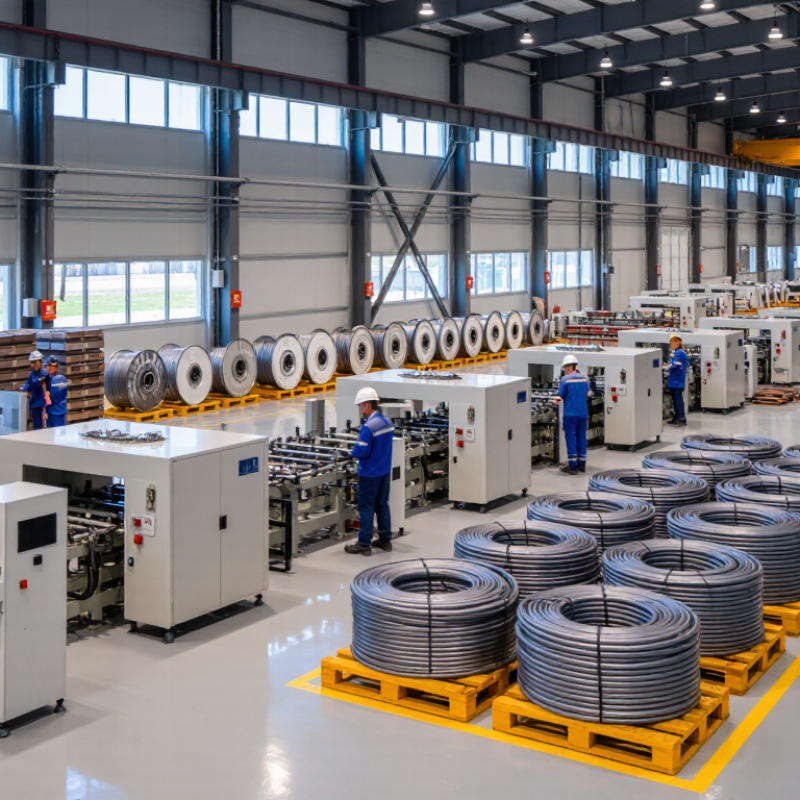
Understanding Cable Conduit and Its Role in Electrical Systems
Cable conduit is a protective pathway for electrical cables, not just a tube around wires. It helps guard insulation against impact, abrasion, dust, and moisture when the system is designed for those conditions. It can also keep cable routes orderly and make later inspection easier. That matters.
In a workshop, a conduit may run along a concrete wall, pass through a cabinet, and turn around a beam. Each bend and connection affects installation. The conduit must suit the cable load, environment, and available space. Metal options can offer stronger impact protection, while plastic types are often lighter and resistant to corrosion. Neither material is right for every job. Installers also need to respect bend limits and avoid overcrowding, which can make cable pulling difficult and increase the risk of damage.
For buyers comparing manufacturers in China, practical checks matter more than broad claims. Review dimensional consistency, material specifications, test records, and installation guidance. Ask whether samples match the stated wall thickness and fit standard connectors. A tidy catalogue is useful, but it cannot show how a product behaves on a real site. Even a well-made conduit can fail to serve its purpose if the route traps water, exposes it to unsuitable heat, or leaves joints poorly secured. Small details count.
How to Evaluate Cable Conduit Manufacturers in China
China’s cable conduit suppliers vary widely in resin quality, tooling, and test discipline. Evaluate the factory, not just its catalogue. Ask for material specifications, wall-thickness tolerances, impact-test results, and batch traceability. For metal conduit, check coating thickness, corrosion resistance, and the consistency of bends and threaded ends. For plastic conduit, inspect samples for smooth interiors, clean cut edges, and deformation after heating. Small details matter.
Ask which edition of IEC 61386 applies to the product, then verify test reports against the exact model and size. A certificate for one conduit type may not cover another. Grand View Research estimated the global electrical conduit market at about USD 6.67 billion in 2023 and forecast 7.1% annual growth through 2030. This market context supports careful supplier screening, but it does not prove any individual factory’s capability. Request recent inspection records and, where possible, arrange an independent audit. Check production capacity against your order schedule, packaging protection, and export documentation. A factory tour can look convincing. It can still miss a weak process. I would also compare trial batches, because one sample rarely tells the whole story.
Who Are the Top Cable Conduit Manufacturers in China? How to Evaluate Them
Use this 100-point scorecard to compare suppliers consistently. The weights are a suggested buyer evaluation framework, not measured company ratings or a ranking.
Request relevant test reports and verify product suitability against applicable requirements, such as IEC 61386 for conduit systems. ISO 9001 concerns quality management systems; it does not certify a specific conduit product.
Profiles of Leading Chinese Cable Conduit Manufacturers
Profiles of leading Chinese cable conduit manufacturers often reveal different strengths rather than one universal definition of quality. Some focus on galvanized steel conduit for factories, where clean threading and consistent wall thickness matter. Others produce PVC or HDPE systems for damp areas and underground routes. The right fit depends on the installation. A conduit that performs well indoors may not suit exposed outdoor conditions.
A useful profile should describe production capacity, material options, and inspection practices in concrete terms. Ask how the manufacturer checks dimensions, coating coverage, impact resistance, and batch consistency. Request sample lengths and technical data, then compare them with the project specification. Details matter. A smooth interior, for example, can make cable pulling easier, while poorly finished ends may damage insulation. Published claims are helpful, but they are not a substitute for current test records.
Manufacturers with clear export experience may also provide practical packaging and documentation support. Still, a large factory is not automatically the best partner. No profile is flawless. Some public information can be broad, and buyers should verify product scope, lead times, and quality controls directly. This takes effort, but it can prevent a costly mismatch between the conduit and its installation environment.
Comparing Products, Materials, Certifications, and Production Capacity
Choosing a leading cable conduit manufacturer in China requires more than comparing catalog prices. Start with the product: rigid or flexible, smooth or corrugated, and sized for the cable bundle and installation path. Material matters. PVC can suit many indoor routes, while galvanized steel offers stronger impact protection; stainless steel may fit corrosive settings. Match each option to temperature, moisture, and mechanical loads.
Ask for material data sheets, dimensional tolerances, and test reports tied to the exact product series. Certifications matter only when their scope covers the product, factory, and destination market. Check expiry dates and issuing bodies, rather than relying on a brochure logo. A hands-on sample check can reveal sharp edges, uneven wall thickness, loose couplings, or lids that are difficult to close. Small flaws matter.
Production capacity needs evidence, not just a large number on a website. Compare monthly output with line count, shifts, tooling, and current order load; then ask about typical lead times and quality controls. Several production lines may still struggle with custom colors or tight tolerances. Comparisons are imperfect. Spreadsheet scores cannot show how easily conduit bends around a crowded junction box. Request a trial order and review batch records before committing to volume.
Choosing a Chinese Cable Conduit Manufacturer for Your Project
Choosing a Chinese cable conduit manufacturer starts with the installation route, not the catalogue. Define the conduit material, diameter, bend radius, and temperature range. Note exposure to moisture, dust, or chemicals. A simple drawing helps suppliers quote the same requirements. Small differences matter. A conduit that fits a sample may still be difficult to install around tight corners or crowded equipment.
Request product data sheets, inspection records, sample lengths, and packaging details. Check dimensions, wall thickness, joint fit, and surface finish on actual pieces. If project specifications require tests or certifications, ask for current evidence and confirm what products it covers. Discuss production capacity, lead time, minimum order quantities, and export documents before placing an order. A pilot batch can reveal fit problems early.
Pay attention to how clearly the supplier answers technical questions. Confirm who handles inspection and how defects are documented. Compare the full delivered cost, including packaging and freight, rather than judging by unit price alone. A low quote can conceal practical trade-offs. Still, no checklist catches everything; allow time for a sample review and an installation trial before approving large-volume production.
Who Are the Top Cable Conduit Manufacturers in China? — Choosing a Chinese Cable Conduit Manufacturer for Your Project
Use this product and supplier checklist to compare manufacturers for your project. It describes common conduit categories and verifiable selection criteria; it does not rank or identify individual companies.
| Product category | Typical project use | Key requirements to confirm | Relevant IEC 61386 reference | Evidence to request from the manufacturer |
|---|---|---|---|---|
| Rigid non-metallic conduit | Fixed wiring routes in buildings and other installations where a rigid protective pathway is specified. | Material and dimensions, compression and impact performance, temperature limits, and suitability for the installation environment. | IEC 61386-1 (general requirements) and IEC 61386-21 (rigid conduit systems). | Test reports for the exact product range, dimensional data, material specifications, and product identification records. |
| Underground conduit system | Buried cable routes, subject to the project design, installation method, soil conditions, and local requirements. | Declared suitability for burial, mechanical performance, joint compatibility, dimensions, and installation limitations. | IEC 61386-24 (conduit systems buried underground), together with applicable general requirements. | Relevant test documentation, installation guidance, connection details, and confirmation that the tested configuration matches the supplied product. |
| Flexible conduit | Cable routes requiring flexibility, including connections to equipment where the design calls for a flexible conduit system. | Bend performance, resistance to expected mechanical stress, temperature range, and compatibility with fittings and cable types. | IEC 61386-1 and IEC 61386-23 (flexible conduit systems). | Product-specific test reports, bend and fitting information, declared operating limits, and inspection samples. |
| Pliable conduit | Installations where the conduit needs to be pliable during routing but is not specified as a flexible conduit system. | Declared classification, bend characteristics, mechanical performance, and suitability for the intended installation conditions. | IEC 61386-1 and IEC 61386-22 (pliable conduit systems). | Classification details, test reports for the relevant conduit type, product drawings, and compatible accessory specifications. |
| Metal conduit system | Projects that specify a metallic conduit system, with selection dependent on the electrical, mechanical, and environmental design requirements. | Metal type and finish, dimensions, mechanical performance, corrosion considerations, and compatibility of joints and fittings. | Check the applicable IEC 61386 requirements and the product’s declared classification for the specific system. | Material and finish specifications, product-specific test documentation, fitting details, and any project-required corrosion data. |
| Supplier quality and delivery | All product categories; important for repeat orders, export projects, and coordinated installation schedules. | Traceability, consistent product specifications, production lead time, order capacity, packaging, and change-control procedures. | IEC 61386 is a product-standard series, not a supplier ranking or a substitute for evaluating manufacturing quality systems. | Current quality-system certificates where applicable, batch records, inspection plans, sample approval records, and a written delivery schedule. |
Before ordering, verify that certificates and test reports cover the exact product, material, size, and configuration offered. Confirm project-specific requirements with the responsible electrical designer and applicable local regulations.
Related Posts
-
2025 Top 5 Cable Conduits: The Best Solutions for Your Wiring Needs
-
Why Choose the Best Cable Conduit for Your Project?
-

Top 10 Cable Hiders for Home and Office
-

How to Choose the Best Home Electric Solutions in 2026?
-
How to Choose the Right Cable Wire for Your Electrical Projects?
-

Top Home Electric Innovations to Watch in 2026?