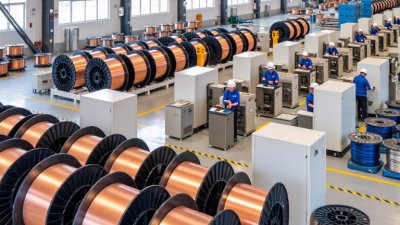
Top 10 Wire Cable Suppliers for Global Buyers
Global electrification is reshaping how buyers evaluate wire cable suppliers. The market is expanding, but purchasing decisions are becoming less simple. Grand View Research valued the global wire and cable market at approximately USD 202.8 billion in 2023. Its report also projects a 4.2% compound annual growth rate from 2024 to 2030. That growth reflects data centers, renewable power, electric vehicles, and grid upgrades.
Demand is moving quickly.
The International Energy Agency’s Electricity 2024 report expects global electricity demand to grow by about 4% annually through 2026. More electricity requires stronger transmission networks, safer building systems, and dependable industrial connections. Nexans Chief Executive Officer Christopher Guerin has described electrification as “the fight of the century.” His statement captures the pressure facing manufacturers and buyers. Cable is no longer a hidden component. It affects project safety, uptime, installation speed, and lifecycle cost.
This guide examines the Top 10 Wire Cable Suppliers for Global Buyers. It considers manufacturing capacity, international certifications, conductor quality, insulation performance, delivery reach, and documented project experience. Company scale matters, but it does not tell the whole story. A large supplier may still struggle with a regional specification or urgent replacement order. Conversely, a smaller specialist may offer better technical support. That difference is easy to miss.
No ranking is perfect.
Market reports also use different definitions, including power cable, communication cable, and specialty wire. We therefore treat published figures as indicators, not absolute measurements. Buyers should verify current certificates, test reports, factory capability, and warranty terms before signing contracts. The strongest choice is rarely the cheapest quotation. It is the supplier that performs consistently when the cable is installed, energized, and tested in real conditions.
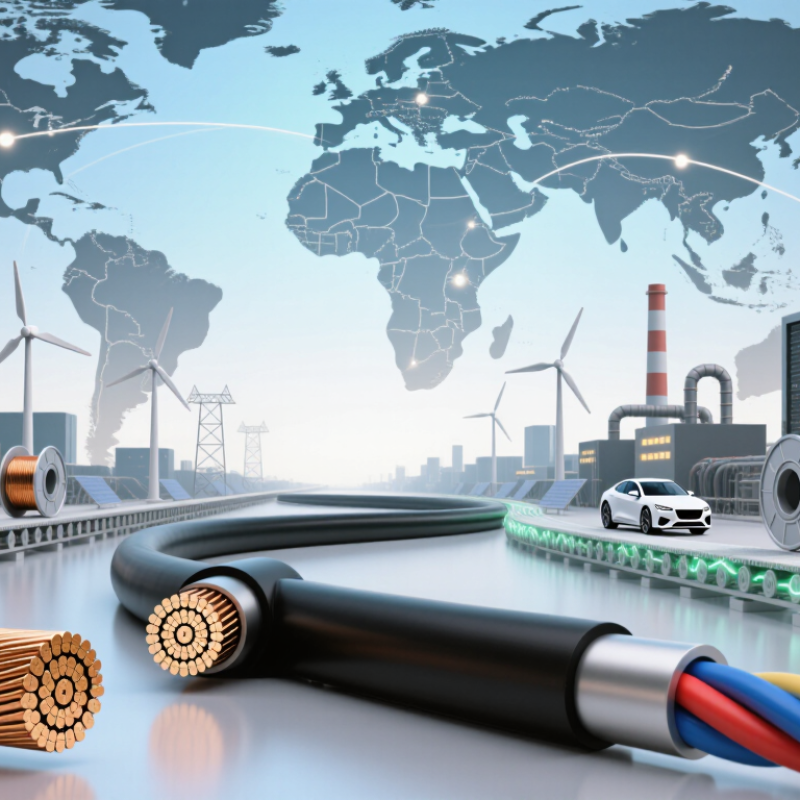
Wire Cable Supplier Basics and Their Role in Global Trade
Wire cable suppliers are more than sellers of finished products. They coordinate conductors, insulation, testing, packaging, and international delivery. That coordination matters. The IEA’s 2023 Electricity Grids report estimates current annual grid investment at about $600 billion. It says this must exceed $800 billion by 2030. Growing demand places pressure on suppliers to provide stable capacity, accurate specifications, and dependable lead times. UNCTAD’s Review of Maritime Transport 2023 states that ships carry over 80% of global trade by volume. A cable shipment may cross several borders before reaching a construction site.
Supplier basics begin with traceable materials and clear technical documents. Buyers should check conductor resistance, insulation thickness, voltage ratings, temperature limits, and test certificates. International Electrotechnical Commission standards can help compare products across markets. Packaging also deserves attention. Moisture, crushed reels, and poor labeling can create costly delays. A low quotation may look efficient, but it can hide weaker testing or uncertain delivery terms. No checklist catches every failure. Global purchasing still needs human judgment, especially when drawings change late or forecasts prove wrong. Good suppliers communicate those problems early, rather than protecting an unrealistic promise.
Key Criteria for Evaluating International Wire Cable Suppliers
Top 10 Wire Cable Suppliers for Global Buyers
Key Criteria for Evaluating International Wire Cable Suppliers
A serious evaluation begins with technical fit, not attractive pricing. Check conductor material, insulation type, voltage rating, temperature range, and bending requirements. Ask for complete datasheets, drawings, and batch-specific test reports. Samples can mislead. Require independent laboratory testing when the cable serves critical equipment or harsh environments.
Review the supplier’s production experience through factory audits, quality records, and traceability procedures. Reliable manufacturers can identify raw materials, operators, machines, and test results for each batch. Verify quality certificates directly with the issuing organization. Confirm compliance with applicable international standards, import rules, labeling requirements, and documentation practices. Production capacity also matters. A supplier may produce excellent samples but struggle with large, repeated orders.
Delivery performance deserves equal attention. Examine lead times, packaging quality, moisture protection, shipping experience, payment terms, and after-sales response. Request references from comparable international projects, not only general testimonials. Test the details. Ask how complaints are investigated and how corrective actions are recorded. No supplier is flawless, and a polished audit can still miss night-shift problems or subcontracted work. I would therefore compare trial orders, inspection results, and communication quality before signing a long-term agreement. A cheaper quotation may hide inconsistent copper purity, weak insulation control, or expensive delays. Reliability appears through evidence collected over time.
Top 10 Wire Cable Suppliers for Global Buyers
Key Criteria for Evaluating International Wire Cable Suppliers
The chart presents a practical buyer-side weighting model for comparing international wire and cable suppliers. Standards compliance, production capacity, quality consistency, lead time, logistics coverage, customization capability, and total cost should be reviewed together rather than assessed in isolation. The percentages represent evaluation priorities, not the performance of any specific company or brand.
Top 10 Wire Cable Suppliers by Products, Quality, and Market Reach
A credible Top 10 wire cable supplier list should compare products, quality, and market reach—not rankings alone. Fortune Business Insights estimated the global wire and cable market at about USD 216.1 billion in 2023. Its growth reflects grid upgrades, renewable projects, data centers, and electric transport. Strong suppliers usually cover copper and aluminum conductors, PVC or XLPE insulation, control cables, fire-resistant cables, and communication products. Product depth matters when one project needs several cable types.
Quality needs measurable proof. Buyers should check IEC 60228 conductor classes, IEC 60502 power-cable compliance, batch traceability, and factory test records. Useful tests include conductor resistance, insulation resistance, tensile strength, elongation, and spark testing. ISO 9001 certification supports process control, but it does not replace product testing. That distinction is easy to miss. It deserves attention.
Market reach also affects real project costs. The World Bank’s 2023 Logistics Performance Index shows major differences in customs efficiency, shipment tracking, and delivery reliability across markets. Leading suppliers should offer export packaging, multilingual documents, regional stock, and predictable lead times. A supplier may quote a low price, yet delayed drums can stop installation crews. My practical view is imperfect: rankings cannot fully measure after-sales support or claim handling. Buyers should request recent certificates, sample reports, reference projects, and a written delivery plan before choosing among the top ten.
| No. | Anonymous Supplier Profile | Core Product Portfolio | Conductor and Insulation Options | Typical Voltage Range | Relevant International Standards | Quality and Compliance Indicators | Primary Export Markets | Indicative Production Capacity | Overall Benchmark Score |
|---|---|---|---|---|---|---|---|---|---|
| 1 | Supplier Profile 01 High-volume industrial cable manufacturer |
Power cables, control cables, building wires, flexible cables, low-voltage armored cables | Copper or aluminum conductors; PVC, XLPE, LSZH, and rubber insulation | 300/500 V to 18/30 kV | IEC 60227IEC 60502-1ASTM B8 | ISO 9001 quality system; routine electrical and dimensional testing; batch traceability | Asia-Pacific, Middle East, Africa, Europe, and Latin America | Approximately 30,000–80,000 metric tons per year | 9.2/10 |
| 2 | Supplier Profile 02 Specialist in infrastructure and utility cables |
Medium-voltage power cables, overhead conductors, aerial bundled cables, utility cables | Compacted copper, aluminum, ACSR, XLPE, PE, and PVC compounds | 0.6/1 kV to 26/45 kV | IEC 60502-2IEC 61089ASTM B232 | ISO 9001; type testing for medium-voltage designs; conductor resistance verification | Europe, Gulf countries, Southeast Asia, Africa, and selected American markets | Approximately 20,000–60,000 metric tons per year | 9.0/10 |
| 3 | Supplier Profile 03 Broad-range cable producer for construction markets |
Building wires, data cables, speaker cables, photovoltaic cables, appliance wires | Solid or stranded copper; PVC, PE, LSZH, and cross-linked insulation | 300/500 V to 1.8 kV DC | IEC 60227IEC 62930EN 50575 | ISO 9001; flame-retardancy testing; conductor elongation and insulation resistance checks | Europe, North America, Australia, Asia-Pacific, and the Middle East | Approximately 15,000–45,000 metric tons per year | 8.8/10 |
| 4 | Supplier Profile 04 Custom cable and OEM manufacturing partner |
Multi-core control cables, instrumentation cables, robotics cables, drag-chain cables | Tinned or bare copper; PVC, PUR, TPE, silicone, and LSZH jackets | 300 V to 1 kV | IEC 60227IEC 60332UL 758 | ISO 9001; custom drawing approval; 100% continuity testing; flexible-life testing | Europe, North America, Japan, South Korea, and Southeast Asia | Approximately 5,000–20,000 metric tons per year | 8.6/10 |
| 5 | Supplier Profile 05 Renewable-energy cable manufacturer |
Solar cables, battery cables, wind-turbine cables, charging cables, storage-system wiring | Fine-stranded tinned copper; XLPO, XLPE, TPU, and halogen-free compounds | 600/1,000 V AC and up to 1.8 kV DC | IEC 62930EN 50618IEC 62893 | ISO 9001; UV, ozone, thermal-aging, and water-resistance testing; batch identification | Europe, North America, Australia, India, the Middle East, and Latin America | Approximately 8,000–30,000 metric tons per year | 8.5/10 |
| 6 | Supplier Profile 06 Industrial and automation cable supplier |
Servo cables, encoder cables, industrial Ethernet cables, sensor cables, tray cables | Stranded copper; PUR, PVC, TPE, and oil-resistant insulation systems | 30 V to 1 kV | IEC 60332IEC 61156NFPA 79 | ISO 9001; impedance and signal-integrity testing; oil, abrasion, and flex-cycle testing | Europe, North America, China, Taiwan, South Korea, and ASEAN markets | Approximately 3,000–15,000 metric tons per year | 8.3/10 |
| 7 | Supplier Profile 07 Communications and structured-cabling producer |
LAN cables, coaxial cables, fiber-optic cables, telephone cables, security cables | Solid copper, copper-clad conductors, optical fiber, PE, PVC, and LSZH jackets | Up to 1 kV for selected power and security cable designs | ANSI/TIA-568.2-DIEC 61156ISO/IEC 11801 | ISO 9001; transmission-performance testing; insertion-loss and return-loss verification | North America, Europe, Asia-Pacific, the Middle East, and Africa | Approximately 4,000–18,000 metric tons per year | 8.1/10 |
| 8 | Supplier Profile 08 Marine, offshore, and transportation cable supplier |
Marine cables, offshore cables, railway cables, shipboard control cables | Tinned copper; XLPE, EPR, PVC, SHF, and low-smoke halogen-free materials | 150/250 V to 1.8/3 kV | IEC 60092IEC 60332IEC 60754 | ISO 9001; smoke-density and halogen-acid-gas testing; fire-resistance testing for selected designs | Europe, East Asia, Southeast Asia, the Gulf region, and North America | Approximately 2,000–12,000 metric tons per year | 7.9/10 |
| 9 | Supplier Profile 09 Flexible and portable power cable producer |
Welding cables, mining cables, rubber cables, extension cables, portable power cords | Fine-stranded copper; EPDM, EPR, neoprene, PVC, and TPU jackets | 300/500 V to 1.8/3 kV | IEC 60245IEC 60332ASTM B174 | ISO 9001; flexing, abrasion, cold-bend, and insulation resistance testing | North America, Europe, mining regions, Australia, Africa, and Latin America | Approximately 2,500–14,000 metric tons per year | 7.7/10 |
| 10 | Supplier Profile 10 Regional low-voltage cable and wire manufacturer |
House wiring, automotive wires, appliance cords, hook-up wires, grounding cables | Solid or stranded copper; PVC, XLPE, cross-linked PVC, and silicone insulation | 30 V to 750 V | IEC 60227IEC 60245ASTM B3 | ISO 9001 or equivalent quality system; dimensional inspection; spark and continuity testing | Domestic markets, neighboring countries, Southeast Asia, Africa, and the Middle East | Approximately 1,000–8,000 metric tons per year | 7.5/10 |
| Data note: The supplier identities are intentionally anonymized. Capacity, voltage, and market-coverage figures are industry benchmark ranges for comparable wire and cable manufacturers; actual specifications, certifications, and export coverage should be verified through current technical datasheets, test reports, and supplier audits. | |||||||||
Quality Standards, Certifications, and Manufacturing Capabilities
Top 10 Wire Cable Suppliers for Global Buyers
Quality begins with consistent manufacturing, not attractive catalog photos. Global buyers should examine conductor materials, insulation compounds, stranding methods, and production capacity. Copper purity, aluminum conductivity, and dimensional tolerance directly affect cable performance. Ask for recent test reports, batch numbers, and traceability records. Small details matter.
Certifications provide useful evidence. ISO 9001 indicates controlled quality processes, while ISO 14001 reflects environmental management practices. Depending on the application, buyers may also require IEC, UL, RoHS, or REACH compliance. These documents should match the actual product and destination market. A certificate alone is not enough. Confirm its scope, validity, and issuing body.
Testing should cover conductor resistance, tensile strength, insulation thickness, voltage endurance, and flame performance where required. Reliable factories can explain their equipment, calibration schedule, and inspection points. Look for extrusion lines, stranding machines, annealing systems, and automated length measurement. Custom colors, jacket materials, cross-sections, and packaging may reveal manufacturing flexibility. Factory audits and sample testing add practical confidence, although neither guarantees perfect field performance. We have seen approved samples pass while later batches showed labeling or dimensional inconsistencies. That weakness deserves attention, not concealment. Suppliers should welcome corrective-action records and share realistic lead times. Clear communication often proves more valuable than polished sales language.
How Global Buyers Can Choose and Purchase from the Right Supplier
Top 10 Wire Cable Suppliers for Global Buyers
Choosing a wire cable supplier requires more than comparing price lists. The IEA’s Electricity 2024 report projects global electricity demand to grow by an average 3.4% annually from 2024 to 2026. This growth increases pressure on cable quality, delivery capacity, and technical support.
Start with the application. Confirm conductor material, cross-sectional area, insulation type, voltage rating, temperature range, and required bend radius. Ask for recent test reports, batch traceability, and third-party certification. Standards such as IEC requirements can help verify safety and performance. A polished catalog is not enough. Request a sample, then inspect its weight, flexibility, markings, and jacket consistency.
Check production evidence, not promises. Review factory capacity, quality-control procedures, complaint handling, and response times. The World Bank’s 2023 Logistics Performance Index evaluates customs, infrastructure, tracking, and delivery timeliness. These details matter when cables cross several borders. Ask whether the supplier can provide export documents, packaging photographs, and a realistic lead-time schedule.
Price deserves caution. A cheaper cable may use less conductive material or thinner insulation. That risk can become expensive during installation. Compare total landed cost, including testing, freight, duties, and replacement exposure. I would also contact two previous buyers, if possible. One supplier may look ideal on paper, yet communication can fail under pressure. That is worth testing before a large order.
Related Posts
-
China Top 10 Wire Cable Manufacturers for Global Buyers
-
How to Choose the Right Wire Cable in 2026?
-
Maximizing Efficiency: How Electric Cable Ducts Improve Cable Management and Reduce Risks in Modern Infrastructure
-
2026 Best Wire Duct Solutions for Organized Electrical Wiring?
-
Top 10 Cable Hider Solutions for a Clutter Free Home?
-
2026 How to Choose the Right Electric Duct for Your Home?