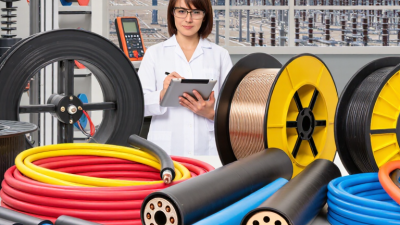
What Are the 2026 Top Cable Wire Types for Global Buyers?
Global buyers are rethinking which cable wire types deserve attention in 2026. Price still matters, but it no longer tells the whole story. Installation conditions, electrical performance, fire behavior, and service life can change the real cost.
William Thomson, better known as Lord Kelvin, helped advance submarine telegraph cable engineering. His often-cited principle remains useful today: “To measure is to know.” Buyers should measure more than conductor size. They should examine insulation thickness, voltage rating, bending radius, temperature resistance, shielding, and certification records. A copper cable wire may suit industrial power distribution, while aluminum may reduce weight and material cost. Fiber-optic cable can support high-speed data, but it requires different handling and termination skills. Low-voltage control cables, solar cables, coaxial cables, and fire-resistant cables each serve distinct environments.
The market is not simple.
Some product labels sound impressive but reveal little about long-term performance. A cable may pass a basic test and still perform poorly near heat, moisture, chemicals, or repeated movement. I have seen specifications focus heavily on conductivity while overlooking connector quality and installation practice. That is an uncomfortable gap.
This guide compares the leading cable wire types expected to attract global buyers in 2026. It considers practical use, technical evidence, sourcing reliability, and total ownership cost. Standards and certification requirements differ by destination, so buyers should verify current local rules before ordering. The best choice is rarely the cheapest reel. It is the cable that remains dependable after years of real service.
How Cable and Wire Types Are Classified for Global Buyers
What Are the 2026 Top Cable Wire Types for Global Buyers?
How Cable and Wire Types Are Classified for Global Buyers
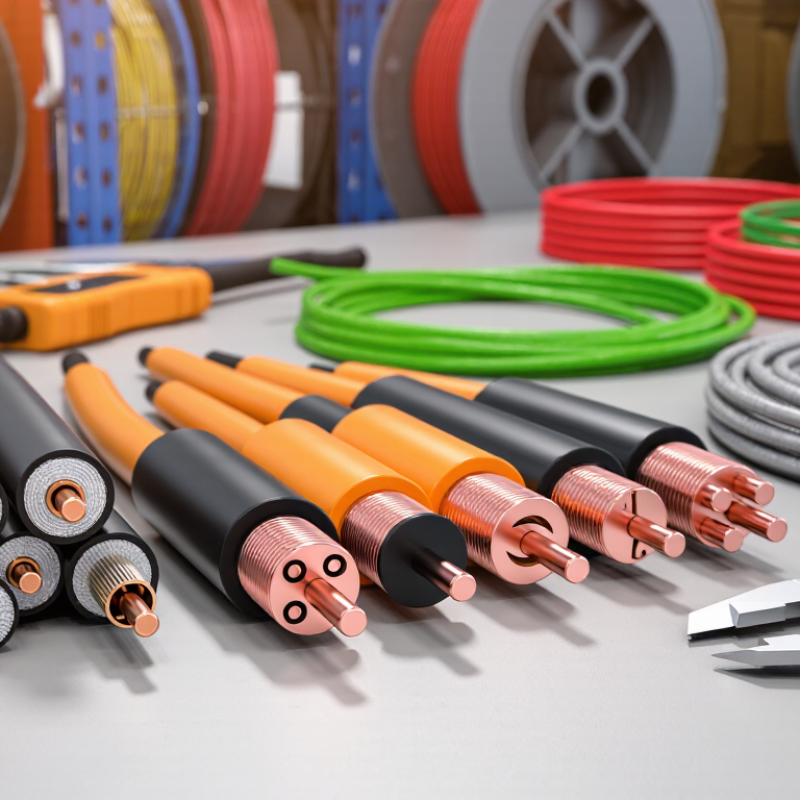
Global buyers should classify cables by conductor, insulation, voltage, construction, and application. Copper offers strong conductivity and easier termination. Aluminum reduces weight and material cost, but requires careful joint design. IEC 60228 classifies conductors from Class 1 solid cores to Classes 5 and 6 flexible cores. That distinction matters in fixed panels, moving equipment, and tight installation spaces.
Building wires usually use PVC or low-smoke, halogen-free insulation. Power cables commonly use XLPE insulation for higher thermal performance. Control cables add shielding when motors or inverters create electrical interference. Communication cables require balanced pairs, controlled impedance, and verified performance categories. For photovoltaic systems, buyers should check sunlight, moisture, temperature, and direct-burial resistance. A cable can look suitable and still fail outdoors.
Demand is becoming more application-specific. The IEA’s Electricity 2024 report projects global electricity demand to grow by an average 3.4% annually through 2026. Its Renewables 2024 report expects nearly 5,500 GW of new renewable capacity from 2024 to 2030. These trends support continued demand for power, control, and solar cables. IEC 60502-1 provides a common reference for many low-voltage power cable designs. However, standards do not replace project verification. I still see buyers selecting by diameter alone. That shortcut is risky. Temperature ratings, bending radius, conductor class, fire behavior, and local installation rules must be checked together.
What Are the Leading Cable Wire Types in 2026?
In 2026, the leading cable wire types will follow grid expansion, renewable projects, and safer building systems. The IEA’s Electricity 2024 report projects global electricity demand to grow by about 3.2% annually from 2024 to 2026. That growth increases demand for XLPE-insulated medium-voltage cables, aluminum-conductor power cables, and copper low-voltage wires. XLPE handles heat and electrical stress well. Aluminum reduces weight and material cost. Copper remains valuable where flexibility, compact size, and strong conductivity matter.
Grid pressure is real. The IEA’s Electricity Grids and Secure Energy Transitions report estimates that over 80 million kilometers of grids must be added or refurbished by 2040. It also says annual grid investment needs to more than double, exceeding 600 billion US dollars. For global buyers, this points to durable underground cables, weather-resistant overhead conductors, and low-smoke, halogen-free wires for public buildings. Fiber-optic cable also remains important for grid monitoring, although it does not carry power.
Tips: Match the conductor to distance, load, installation space, and local temperature. Check insulation ratings, bending limits, flame performance, and third-party test records. Do not choose by price alone. A lighter aluminum cable may need larger dimensions. A copper cable may simplify tight installation. The “best” type depends on the site, and that is easy to underestimate. Always verify the latest technical standard before purchasing.
Which Materials and Features Define Each Cable Type?
For global buyers in 2026, copper cables remain a strong choice where conductivity, flexibility, and long service life matter.
Their higher price can be justified in crowded panels, industrial machines, and long operating cycles. Aluminum cables reduce weight and cost, especially in large power networks. They need correctly sized terminals because thermal expansion can loosen connections. That detail is often missed.
Insulation defines performance as much as the conductor.
PVC works well for general indoor wiring and offers practical cost control. XLPE withstands higher temperatures and supports demanding power applications.
LSZH insulation produces less smoke and fewer corrosive gases during fire conditions, making it suitable for public buildings and transport areas. Shielded cables limit electromagnetic interference in data, automation, and control systems.
Flexible cables use fine-stranded conductors, but repeated bending still requires a suitable bend radius. No cable is perfect.
Tips: Match the cable to voltage, current, temperature, moisture, movement, and installation space. Check conductor class, insulation rating, flame behavior, and test documentation before ordering. Ask for samples when jacket flexibility or terminal fit is uncertain. A lower price can hide thicker tolerances, weak printing, or poor batch consistency. I have found that clear markings and traceable inspection records often predict fewer installation problems. Still, specifications can be misunderstood, so local engineers should verify the final selection against applicable electrical standards.
How Should Buyers Match Cable Types to Applications?
Global buyers in 2026 should match cable construction to the working environment, not only to price. XLPE insulated cables suit high-temperature power distribution and industrial feeders. PVC remains practical for ordinary indoor wiring and moderate-duty installations. Low-smoke, zero-halogen cables fit crowded public buildings, transport hubs, and enclosed equipment rooms. Safety matters there.
Data applications need different priorities. Shielded twisted-pair cables help control electromagnetic interference near motors and variable-speed drives. Fiber-optic cables support long-distance networks, high bandwidth, and electrically noisy sites. Coaxial cables still perform well in selected radio-frequency and video systems. The connector must match the cable, too. A perfect cable with a poor termination can still lose signal.
Outdoor and underground projects require tougher protection. Armored cables resist crushing, movement, and accidental impact. Weather-resistant jackets help with sunlight, moisture, and temperature cycling. Buyers should check conductor material, cross-sectional area, voltage rating, bend radius, fire behavior, and ingress protection. Request verified test reports and installation guidance from qualified suppliers. Do not rely on a catalog image. A neat specification can still fail in a real cable tray. I have seen oversized cables create difficult bends and unnecessary installation costs. Smaller is not always better. Thermal loading, future capacity, and maintenance access deserve a second review.
What Standards and Costs Affect Global Cable Selection?
Global cable selection in 2026 will depend less on “top” technology and more on standards, installation conditions, and landed cost. The IEA’s Electricity 2024 report projects global electricity demand to grow by about 3.2% annually through 2026. That growth supports stronger demand for low-voltage PVC cables, XLPE power cables, LSZH fire-performance cables, and medium-voltage EPR designs.
Standards decide whether a cable can enter a project.
IEC 60502-1 commonly guides low-voltage power cables, while IEC 60227 covers many PVC-insulated flexible cables. For public buildings, buyers should check IEC 60332 flame propagation, IEC 60754 halogen-acid gas limits, and IEC 61034 smoke density. Construction projects in Europe may also require EN 50575 reaction-to-fire classification. A certificate alone is not enough. Test voltage, conductor class, temperature rating, and installation method still require technical review.
Copper remains a major cost variable. The International Copper Study Group continues to report tight balances and uncertain mine supply, while the World Bank’s Commodity Markets Outlook highlights continuing metal-price volatility. A cable quotation can change after copper movement, exchange-rate shifts, freight charges, and customs duties. PVC often lowers purchase cost, but LSZH may reduce smoke-related risk in crowded spaces. XLPE usually costs more than PVC, yet it supports higher operating temperatures and longer service life. This trade-off is easy to oversimplify. Some buyers still compare price per meter, although lifecycle cost may be the more honest measure.
Related Posts
-
How to Choose the Right Electric Wire for Global Sourcing?
-
What is Electric Wire and Why You Need to Choose the Right Type for Your Projects
-

2026 Best Cable and Wire Options What Should You Choose?
-
Top 10 Cable Management Solutions for Global Buyers
-

2025 Top 5 Cable Conduits: The Best Solutions for Your Wiring Needs
-

Top 10 Wire Cable Suppliers for Global Buyers