
What Are the Top Electric Cable Duct Systems in China?
China’s electric cable duct systems market serves factories, metro lines, solar farms, data centers, and residential developments. The right system must protect cables from impact, water, heat, chemicals, and future maintenance problems. Conditions vary widely. Coastal projects face salt and humidity. Northern sites may experience freezing soil. Industrial parks often add heavy vehicles, oil exposure, and crowded utility corridors.
Thomas E. Glavinich, PE, a respected electrical construction researcher, states, “Cable management is not simply about holding cables; it is about protecting the electrical system.” This principle matters when comparing PVC ducts, HDPE conduits, concrete cable trenches, fiberglass systems, and modular polymer channels. Each option has different strengths. HDPE bends around obstacles and resists moisture. Concrete offers strong mechanical protection. PVC is practical for many low-cost installations. Fire performance still requires careful verification.
A useful comparison should examine wall thickness, bending radius, load resistance, drainage, flame behavior, installation speed, and replacement access. It should also check documented testing and supplier consistency. A low price can become expensive after trench repairs or cable overheating. That lesson is easy to overlook.
Real projects are rarely perfect.
Some specifications remain unclear.
This guide reviews leading electric cable duct systems in China through performance, application, compliance, and lifecycle value. It does not assume one material fits every project. Engineers should verify local conditions, cable types, installation depth, and applicable Chinese standards before selection. Supplier claims deserve independent review, too. That extra step may seem slow, but it can prevent damaged insulation, blocked ducts, and avoidable downtime.
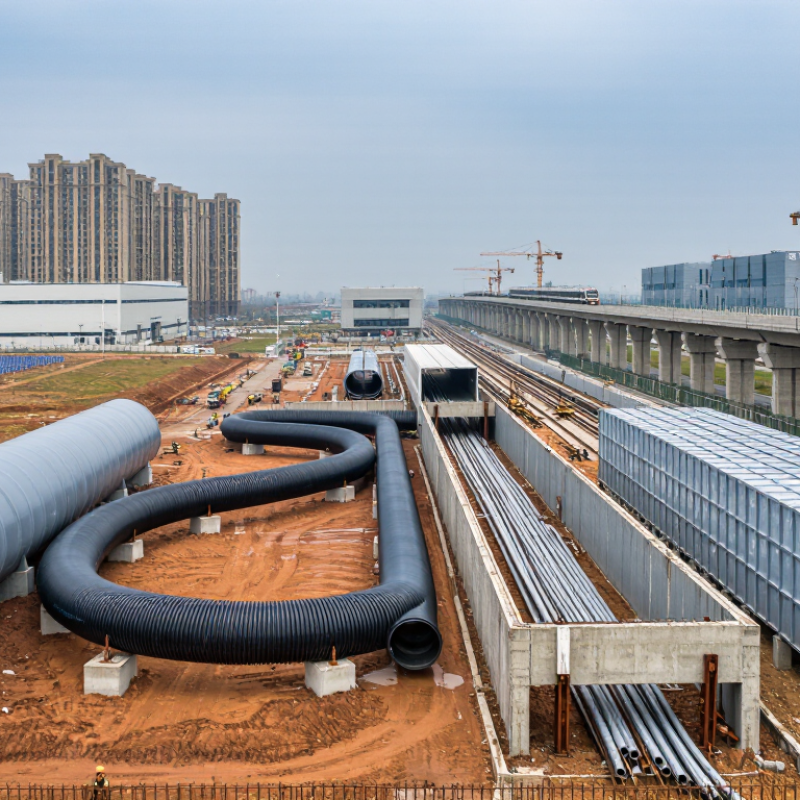
Types of Electric Cable Duct Systems Used in China
China uses several electric cable duct systems, selected by voltage, location, heat, and maintenance access. The China Electricity Council reported 9.22 trillion kWh of national electricity consumption in 2023, up 6.7% year on year. That expanding load supports wider use of protected cable routes in factories, transport projects, and dense residential districts.
Buried HDPE ducts suit road crossings and outdoor distribution lines. They resist moisture and allow cables to be replaced through draw ropes. PVC conduits are lighter and common in building walls, floors, and small feeder routes. Steel conduits provide stronger impact and fire protection, especially near workshops and equipment rooms. For exposed indoor systems, ladder trays improve ventilation around large power cables. Solid-bottom trays offer better dust protection. They can also trap heat.
Enclosed trunking works well in electrical rooms and commercial buildings. Its smooth cover limits accidental contact, but crowded sections require careful thermal calculations. Concrete ducts and utility tunnels serve urban corridors with many circuits, although construction costs and drainage needs are significant. Smaller microducts support communication and control cables rather than high-current power cables. China’s GB/T 50217 cable-design standard emphasizes safe spacing, mechanical protection, and maintainability. The IEC 61537 framework also guides cable-support systems. Field surveys often reveal a gap: drawings look orderly, while real ducts contain spare loops, water, or undocumented changes. Engineers should inspect actual routes before selecting a system.
Types of Electric Cable Duct Systems Used in China
Common systems include rigid PVC conduit for indoor wiring, HDPE duct for underground routes, steel conduit for mechanically exposed areas, and concrete-encased duct banks for major utility corridors. The chart shows representative nominal duct or conduit sizes used in typical installations; actual sizing depends on cable count, voltage, fill ratio, heat dissipation, and project standards.
Key Materials and Structural Designs
What Are the Top Electric Cable Duct Systems in China?
Key Materials and Structural Designs
China’s electric cable duct systems commonly use PVC, HDPE, galvanized steel, aluminum, and fiber-reinforced plastic. Each material serves a different installation environment. PVC is lightweight, economical, and suitable for dry indoor spaces. HDPE performs well in buried ducts because it resists moisture and ground movement. Galvanized steel provides stronger impact protection, especially in factories and utility rooms. Aluminum reduces weight while offering useful corrosion resistance. Fiber-reinforced plastic suits coastal or chemically aggressive areas.
The structure is equally important. Trough ducts provide quick access for inspection and cable replacement. Enclosed trunking improves protection against dust, falling objects, and accidental contact. Ladder designs support heavy power cables while allowing airflow around them. Underground systems often combine smooth inner walls, drainage points, and separated channels for power, control, and communication cables. Fire barriers and sealed joints deserve close attention. Small gaps can spread smoke.
Engineers should check load capacity, temperature rise, bending radius, grounding, and expansion before selecting a system. In practical project reviews, poor support spacing often causes sagging, even when the duct material is strong. Weight matters. A perfect design rarely exists; designers may still underestimate future cable additions. Leaving spare capacity is sensible, but excessive space increases cost and installation volume. Local climate, building structure, maintenance access, and applicable electrical standards should guide the final choice.
Leading Chinese Cable Duct System Manufacturers
China’s leading cable duct system manufacturers usually stand out through production depth, not advertising claims. Experienced suppliers often provide PVC, halogen-free, aluminum, and galvanized steel solutions for commercial, industrial, and infrastructure projects. Their factories may include extrusion lines, molding equipment, automated cutting, and dedicated tooling workshops. This range helps manufacturers produce straight ducts, elbows, tees, reducers, covers, and mounting accessories with consistent dimensions.
A reliable manufacturer should explain material grades, wall thickness, operating temperature, load capacity, and flame performance clearly. Ask for test reports, quality procedures, and samples from current production batches. I usually inspect cover engagement, cut edges, surface marks, and connector alignment. Small gaps matter. Strong suppliers also support drawings, custom colors, packaging, and export documentation. However, factory size alone proves little. A large facility can still miss details during assembly or inspection.
Tips: Request a sample kit before placing a large order. Test fitting around corners and junction boxes. Confirm whether local standards or IEC-based requirements apply. Discuss UV exposure, moisture, chemical contact, and installation temperature early. Keep written specifications for every revision. This prevents an attractive prototype from becoming an unsuitable shipment. Suppliers with transparent communication, traceable inspections, and practical engineering support are usually safer choices, even when their quotation is not the lowest.
How to Compare Performance, Safety, and Cost
What Are the Top Electric Cable Duct Systems in China?
In Chinese commercial and industrial projects, cable duct selection depends on measurable site conditions. Top options usually include galvanized steel, aluminum, PVC, and halogen-free polymer systems.
Performance starts with load capacity, heat dissipation, and resistance to moisture. Galvanized steel handles heavy cables and mechanical impact well. Aluminum reduces weight and resists corrosion in humid areas. Polymer ducts simplify cutting and installation, but excessive heat may weaken them. Check the manufacturer’s test data, not only product photographs. Field measurements often reveal crowded bends and undersized access covers.
Safety requires more than flame-retardant wording. Review insulation clearance, grounding continuity, fire performance, and ingress protection ratings. For factories, examine dust, oil, vibration, and cleaning chemicals. In public buildings, low-smoke and halogen-free materials can reduce hazardous emissions during fire. Confirm compliance with applicable Chinese standards and project specifications. A qualified electrician should inspect joints, supports, and sharp edges before energizing the system.
Cost comparisons should include installation hours, brackets, covers, transport, maintenance, and future cable additions. Cheap PVC may save money initially, yet replacement costs can rise near hot equipment. Steel can cost more to install because it needs heavier supports and careful bonding. Aluminum may offer a useful balance, although material prices fluctuate. My own assessment would remain cautious: a lower purchase price does not prove better value. Ask for samples, test certificates, warranty terms, and a complete bill of materials before approval.
What Are the Top Electric Cable Duct Systems in China? - How to Compare Performance, Safety, and Cost
| System Type | Typical Application | Common Materials | Typical Load Capacity | Corrosion Resistance | Fire and Smoke Performance | Mechanical Protection | Installation and Maintenance | Typical Cost Range (RMB/m) |
Key Selection Consideration |
|---|---|---|---|---|---|---|---|---|---|
| Hot-Dip Galvanized Ladder Tray | Large power cables, industrial plants, substations, utility corridors, and long horizontal runs. | Carbon steel with a zinc coating, usually supplied with brackets, couplers, and covers where required. | High Approximately 100–300 kg/m, depending on width, span, and thickness. |
Good Suitable for most indoor and moderately corrosive outdoor environments; additional coating may be needed in coastal or chemical areas. |
Non-combustible metal construction; does not normally add fuel to a fire. Cable fire performance depends on the selected cables and fire-stopping system. | Very high Strong resistance to impact and cable weight when properly supported. |
Fast cable placement and easy visual inspection; requires bonding and continuity checks for metallic sections. | 120–380 | Best for heavy cable loads, heat dissipation, and projects requiring strong mechanical support. |
| Perforated Steel Cable Tray | Commercial buildings, factories, data rooms, control systems, and medium-density power distribution. | Pre-galvanized steel, hot-dip galvanized steel, or powder-coated steel. | Medium to high Approximately 60–200 kg/m, depending on tray depth and support spacing. |
Good Galvanized or coated finishes provide practical protection; exposed cut edges should be treated where necessary. |
Metal body is non-combustible; open perforations support ventilation and help limit heat accumulation. | High Provides better cable containment than ladder tray while remaining relatively lightweight. |
Simple routing and inspection; cable ties and separators can improve organization and electromagnetic compatibility. | 90–320 | A balanced option when ventilation, support strength, accessibility, and cost must be considered together. |
| Solid-Bottom Steel Cable Tray | Control cables, instrumentation, low-voltage systems, and areas requiring improved shielding or small-object containment. | Galvanized steel, stainless steel, or coated steel. | Medium to high Approximately 60–220 kg/m, depending on construction and span. |
Good to excellent Stainless steel provides stronger resistance in wet, saline, or chemically aggressive environments. |
Metal construction is non-combustible; solid bottoms can reduce airflow compared with ladder or perforated designs. | Very high Offers continuous support and protects smaller cables from falling objects and localized impact. |
Neat cable routing and improved shielding; more time may be required for cable access and heat assessment. | 150–550 | Preferable where cable protection, shielding, and containment are more important than maximum ventilation. |
| PVC Electrical Trunking | Indoor lighting circuits, office wiring, residential distribution, low-voltage control wiring, and wall-mounted routes. | Rigid PVC, commonly with a removable cover and internal dividers. | Low to medium Usually suitable for light cable bundles; capacity depends on wall thickness and fixing distance. |
Excellent Resistant to moisture and many common chemicals; UV resistance varies by formulation. |
Many products are flame-retardant or self-extinguishing, but actual performance must be verified from the product test certificate. PVC may produce smoke and corrosive gases when burning. | Moderate Protects against abrasion and minor impact but is less suitable for heavy industrial exposure. |
Very easy to cut, install, open, and modify; requires correct expansion allowance and suitable fire sealing at penetrations. | 15–90 | Cost-effective for indoor, low-to-medium load routes where fast installation and clean appearance are priorities. |
| HDPE Underground Cable Duct | Buried power and telecommunications routes, road crossings, utility corridors, and directional-drilling installations. | High-density polyethylene, supplied as smooth-wall or corrugated conduit, often with draw cords or inner ducts. | High underground protection Performance depends on burial depth, soil conditions, wall thickness, and concrete encasement. |
Excellent Highly resistant to soil moisture, corrosion, and many chemicals. |
Normally combustible unless a specially formulated fire-rated product is used; underground fire performance and building-entry sealing must be assessed separately. | Very high underground Good resistance to soil movement and impact; not intended for unsupported indoor exposure. |
Suitable for long continuous runs; requires attention to bending radius, pulling tension, joint quality, and drainage. | 18–140 | Strong choice for buried infrastructure where corrosion resistance, flexibility, and long service life are required. |
| Concrete-Encased Duct Bank | High-capacity underground power distribution, substations, campuses, airports, and urban utility corridors. | Multiple PVC, HDPE, or rigid conduits surrounded by reinforced or non-reinforced concrete. | Very high Designed according to cable quantity, traffic loading, burial depth, thermal requirements, and structural design. |
Excellent Concrete and selected conduits provide durable protection when water ingress and joint details are controlled. |
Concrete provides strong passive protection; cable fire behavior, duct separation, and building-entry fire stopping still require engineering review. | Excellent Very high resistance to traffic loads, impact, and ground disturbance. |
High initial labor and civil-work requirements; future cable replacement is possible but depends on duct layout and draw-pit access. | 280–1,200+ | Best for critical underground routes where maximum structural protection and future capacity justify higher civil costs. |
| Aluminum Cable Tray | Roofs, marine facilities, chemical areas, clean industrial spaces, and projects requiring reduced structural weight. | Extruded or formed aluminum alloy, with optional covers and fittings. | Medium to high Approximately 60–220 kg/m, subject to alloy, profile, width, and support span. |
Excellent Natural oxide protection performs well in many humid environments; compatibility with dissimilar metals must be checked. |
Non-combustible metal construction; cable insulation and fire barriers remain the controlling fire-safety elements. | High Good resistance to corrosion with lower dead weight than steel. |
Lightweight and easy to handle; requires careful torque control and electrical bonding across joints. | 220–650 | Useful when corrosion resistance and low installation weight are more important than the lowest purchase price. |
| FRP/GRP Cable Tray | Chemical plants, wastewater facilities, coastal infrastructure, tunnels, and areas with severe corrosion exposure. | Fiberglass-reinforced plastic using polyester, vinyl ester, or other resin systems. | Medium to high Typically 50–180 kg/m, depending on profile, resin, width, and support spacing. |
Excellent Strong resistance to salt spray, moisture, and many chemical environments. |
Fire and smoke performance varies significantly by resin and formulation; select products with verified flame-spread and smoke data when required. | High Good impact and stiffness performance, although some formulations can be more brittle than metal under severe impact. |
Lightweight and electrically non-conductive; field cutting requires suitable tools and control of dust and edge finish. | 260–850 | Best for highly corrosive environments or where electrical non-conductivity is an important design requirement. |
Note: Cost ranges are indicative China-market estimates for typical material supply and may exclude supports, fittings, covers, civil work, installation, testing, taxes, and transportation. Actual load ratings, fire classifications, ingress protection, temperature limits, and service life must be verified against the selected product’s technical documentation and the project design conditions. Metallic systems should be assessed for protective earthing and equipotential bonding, while underground and building-entry systems require appropriate water sealing and fire stopping.
Installation Standards and Typical Applications
What Are the Top Electric Cable Duct Systems in China?
China’s common cable duct systems include steel trunking, halogen-free plastic ducts, HDPE underground ducts, and concrete duct banks. The suitable choice depends on load, fire risk, moisture, and maintenance access. Indoor power rooms often use galvanized steel trunking because it resists impact and supports heavier cables. Offices and clean areas may use halogen-free ducts with smoother edges. Underground roads and industrial sites usually need HDPE ducts or concrete-encased systems.
Installation should follow the approved design, GB/T 50217, and relevant requirements in GB 50303. Low-voltage projects also require coordination with GB 50054. Ducts must have continuous supports, secure covers, safe bending radii, and separation between power and communication cables. Cable fill should remain within the design limit. Overcrowding creates heat. Poor drainage is another frequent problem.
Tips: Check route drawings before drilling. Keep spare ducts for future circuits. Seal underground entries against water and insects. Label both cable ends. Inspect bonding continuity on metal trunking, especially across joints. A small site mock-up can reveal awkward bends or weak supports before full installation. Measure twice.
Typical applications include factories, data rooms, rail facilities, commercial buildings, and renewable-energy sites. However, one standard detail rarely fits every project. Local temperature, fire compartments, flooding, and maintenance habits can change the specification. Some designs look neat but leave no room for repair. That deserves reconsideration. Require test records, material certificates, and installation photographs before concealed sections are closed.
Related Posts
-
Maximizing Efficiency: How Electric Cable Ducts Improve Cable Management and Reduce Risks in Modern Infrastructure
-
How to Choose the Best Electric Cable Duct for Your Project?
-
What is a cable duct and how is it used in wiring?
-
2026 Best Cable Ducting Solutions for Your Home and Office?
-
Maximizing Electrical Safety: The Essential Role of Cable Ducts in Modern Infrastructure
-
What Are Cable Management Systems and Why Use Them?