
10 Essential Tips for Managing Duct Cable Effectively
In the world of technology and connectivity, managing duct cable is vital for efficient operations. Renowned industry expert John Carter once said, "Effective duct cable management can prevent costly disruptions." This quote highlights the importance of organizing duct cable systems.
Duct cables are essential for communication networks and data transfer. Proper management ensures seamless performance and longevity. However, many overlook the complexities involved in handling these cables. Mistakes can lead to downtime and inefficient systems.
Strategically planning duct cable installations can seem daunting. Yet, a few essential tips can help streamline the process. Whether it's labeling cables or regular inspections, small details make a big impact. Thoughtful management not only clears clutter but also enhances network efficiency. Embracing best practices in duct cable management is crucial for success.

Understanding Duct Cable: Types and Components
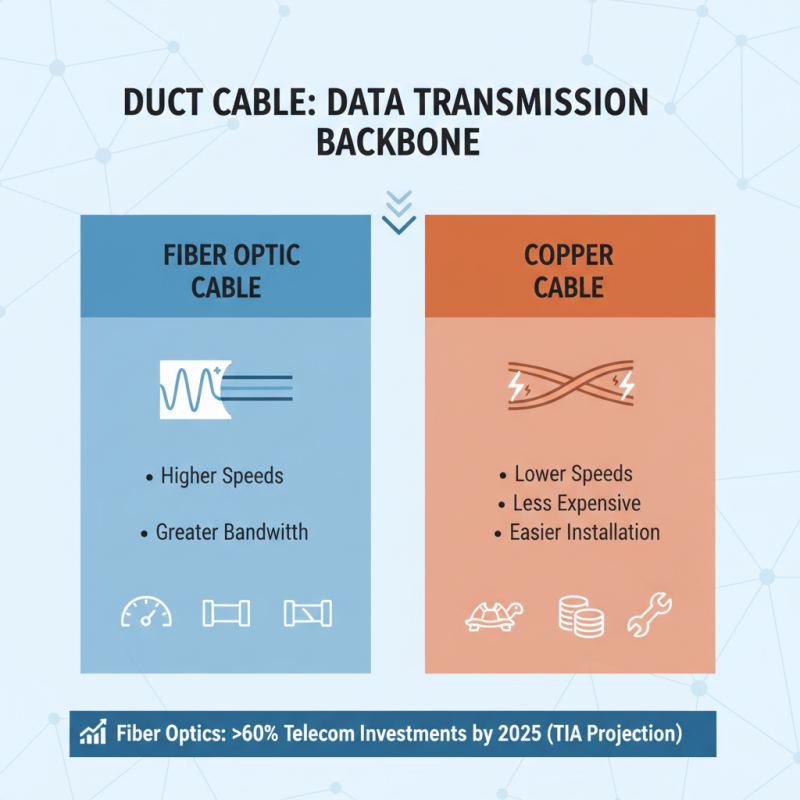
Duct cable serves as the backbone for data transmission in various settings. Understanding its types and components is essential for effective management. There are two primary types: fiber optic and copper cable. Fiber optics offer higher speeds and greater bandwidth. Copper cables, while slower, are generally less expensive and easier to install. According to the Telecommunications Industry Association, fiber optics are projected to account for over 60% of telecommunication investments by 2025.
Managing duct cables effectively requires careful planning. One tip is to maintain a proper scheduling for installation. Inadequate timing can lead to overcrowding and damage. Regular inspection is also vital. It helps identify wear or signal loss early, minimizing disruptions.
Another crucial aspect is proper labeling of cables. Clear labels avoid confusion during maintenance. Mistakes can lead to costly downtime. Industry reports suggest that improper management can increase installation costs by up to 30%.
Understanding duct cable components, like connectors and trays, is also essential. It helps in better organization and management. Cables need space to breathe; overcrowding can hinder performance. Regularly reviewing and adjusting your cable management strategy can greatly enhance performance and longevity. Consider these tips as you navigate the complexities of duct cable management.
Planning Your Duct Cable Route: Key Considerations
Planning an effective duct cable route is crucial for optimal performance and longevity. According to a report by the Institute of Electrical and Electronics Engineers (IEEE), 30% of cable failures are attributed to poor installation practices. This highlights the importance of thoughtful planning in duct cable management.
Start by understanding the layout of your space. Identify potential obstacles. These can include walls, existing electrical infrastructure, and ventilation systems.
Conduct a thorough assessment of how the cables will be routed. It’s vital to maintain proper spacing. Too close together, cables may overheat and fail. The National Electrical Manufacturers Association (NEMA) recommends a minimum clearance of 12 inches between cables to prevent electromagnetic interference. Consider future upgrades during your planning. It’s better to leave some room for expansion than to redo the entire setup later.
Document the route using diagrams. Visual representation aids clarity. Install markers to indicate cable paths. This practice can help during maintenance but requires additional time and resources.
Balancing efficiency with attention to detail can be challenging. A rushed plan may lead to mistakes that are costly in the long run. Embrace a mindset of reflection throughout the planning process. Reflect on each decision. Are there alternatives? What can be improved?
Essential Tools for Duct Cable Management
Managing duct cables can be challenging, but the right tools make a huge difference. Start with cable ties. They keep cables together neatly. Use different sizes for various cables. Velcro straps work well too. They are adjustable and reusable.
Labeling is another essential tool. Use clear labels on cables and ducts. This helps in identification. It reduces confusion when troubleshooting. Consider a cable management box. It hides cables effectively, creating a tidy appearance.
Don't overlook cable trays. They provide support, keeping cables off the ground. Ensure the trays are properly installed and secure. Measure the space before installation. Sometimes, planning goes awry. You might find cables still tangled after setting up. Adjust your approach as needed. Remember, effective management is about continuous improvement, not perfection.
Best Practices for Organizing Duct Cables
Maintaining an organized duct cable system is crucial for efficiency. Studies show that up to 30% of wasted time in workplaces is due to poor cable management. Data centers, for example, lose thousands annually just because of tangled cables. Taking proper steps can mitigate these issues.
One best practice is labeling each cable clearly. This prevents confusion during troubleshooting and maintenance. When cables are jumbled, finding the right one can take ages. Using color-coded labels can further enhance visibility. Consider that 55% of technicians find it easier to work with labeled systems.
Another tip is to avoid overloading duct cables. A crowded system can cause overheating, leading to potential failures. Research indicates that up to 50% of cable malfunctions are linked to overuse. Regularly review the cable load and replace or redistribute excess cables. Emphasizing cleanliness and order can improve overall system reliability and performance.
10 Essential Tips for Managing Duct Cable Effectively
Maintaining Duct Cables: Tips for Longevity and Performance
Maintaining duct cables requires careful attention to detail. They are crucial for efficient data transmission. Regular inspections can prevent many issues. Look for wear and tear, and replace damaged cables. This simple act can save time later.
Proper organization of cables is essential. Use labeled ties to keep them neat. Avoid tight bends as they can cause damage. Take the time to arrange bundles, even if it seems tedious. A little effort goes a long way.
Environmental factors matter too. Cables should not be exposed to extreme temperatures. Dust and moisture can degrade performance. Seal entry points to minimize exposure. These actions may seem minor but have a significant impact. Remember that neglect can lead to costly repairs. Always prioritize upkeep for longevity.
10 Essential Tips for Managing Duct Cable Effectively
| Tip No. | Tip | Description | Expected Outcome |
|---|---|---|---|
| 1 | Regular Inspection | Check duct cables for physical damage or wear. | Early detection of issues. |
| 2 | Proper Labeling | Label cables clearly to avoid confusion. | Easier troubleshooting. |
| 3 | Temperature Control | Keep the environment cool to prevent overheating. | Maintains performance. |
| 4 | Avoid Over-Tensioning | Do not stretch cables excessively during installation. | Prevents damage. |
| 5 | Use Cable Management Tools | Employ trays or ties to organize cables. | Improves access and airflow. |
| 6 | Document Layouts | Keep records of cable layouts and changes. | Aids maintenance and upgrades. |
| 7 | Avoid Sharp Bends | Do not bend cables at sharp angles. | Reduces risk of cable failure. |
| 8 | Regular Cleaning | Dust and clean ducts regularly. | Maintains air quality and performance. |
| 9 | Cable Replacement Schedule | Establish a timeline for replacing old cables. | Ensures reliability. |
| 10 | Professional Installation | Hire professionals for installation to ensure standards. | Minimizes risks of installation errors. |
Related Posts
-
Understanding the Importance of Duct Cable in Modern Communication Systems
-
10 Essential Tips for Installing Electric Cable Ducts Safely and Effectively
-

2025 Top Cable Holders: Best Solutions for Organizing Your Cables Efficiently
-

Revolutionize Your Workspace: Unleashing the Power of Innovative Cable Holders
-
Why Cable Management is Essential for a Tidy and Efficient Work Environment
-
How to Choose the Right Custom Cable for Your Needs?