
Top J1772 Charging Stations for Global Buyers
Choosing a J1772 charging station for an international project takes more than comparing power ratings. Buyers should confirm the connector type, charging speed, cable length, and installation requirements against their vehicles and site plans. J1772 is commonly used with Type 1 vehicle inlets, but compatibility can vary across markets and models. Check each vehicle’s documentation before placing a bulk order. Small details matter. A cable that reaches comfortably in a showroom may fall short beside a real parking bay.
For global buyers, the strongest options are not always the units with the longest feature list. Look for clear technical documentation, tested safety claims, a practical warranty, and responsive support. Also confirm that the product’s certifications and electrical specifications suit the destination market; requirements differ, so local professional review may be needed. Ask suppliers for installation guides and realistic lead times. A dependable answer is better than a vague promise. Even a polished spec sheet can leave one practical question unanswered: who helps when the charger reports a fault on a busy weekday?
This guide compares leading J1772 charging stations through the needs of distributors, fleet managers, property operators, and homeowners. It considers performance, durability, usability, and service—not just headline numbers. The ideal choice depends on daily charging patterns, available power, weather exposure, and future expansion plans. There is no universal winner, and that is worth admitting. A careful shortlist can still help buyers reduce uncertainty, avoid mismatched equipment, and make a more informed purchasing decision.
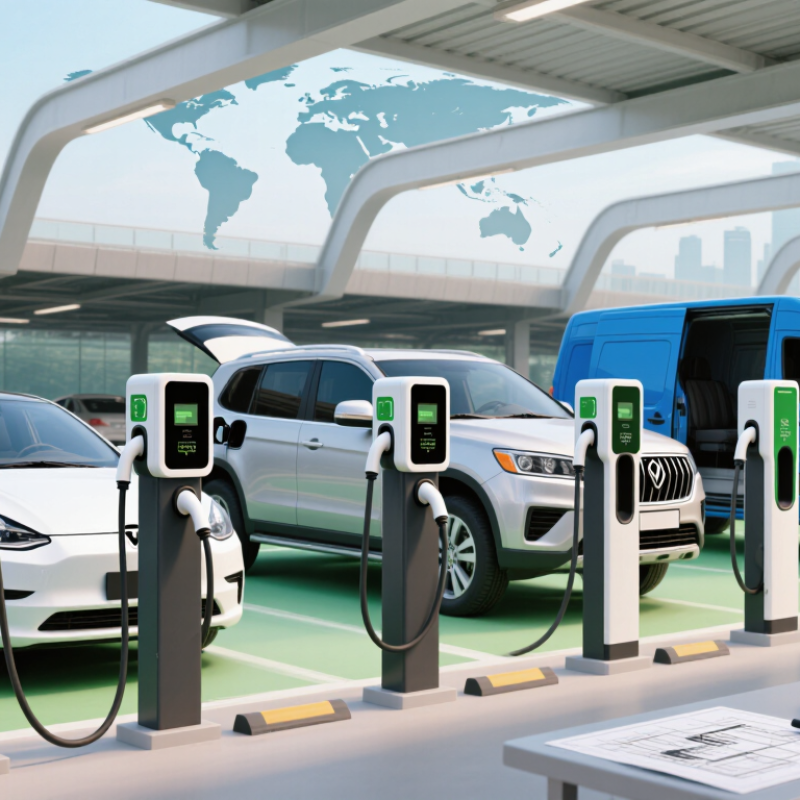
Understanding the J1772 Standard and Its Global Compatibility
Top J1772 Charging Stations for Global Buyers
J1772, often called Type 1, is an AC charging connector used widely in North America and found in some other markets. It connects a charging station to an electric vehicle, while the vehicle’s onboard charger converts incoming AC power for the battery. The plug may look familiar, but appearance alone does not confirm compatibility.
Global buyers should check the vehicle inlet, charging level, and electrical supply before choosing a station. Many European vehicles use Type 2 for AC charging, while DC fast-charging connectors also vary by region. An adapter can help with some physical connections, but it cannot change voltage, current limits, or a vehicle’s supported charging protocol. Check the vehicle manual and station specifications. Small details matter.
For a practical check, compare the connector, rated current, and supply voltage listed for both the car and station. A unit designed for a particular grid may not deliver its advertised output elsewhere. Installation requirements can also differ by location, so confirm them with a qualified local electrician. I would not treat “global compatible” as a guarantee; it is a claim worth examining closely. A clear compatibility chart and verified technical documents are more useful than a broad promise.

Key Features to Compare in J1772 Charging Stations
When comparing J1772 charging stations, start with the vehicle and installation site, not the highest advertised output. J1772 is widely used for AC charging in North America, but buyers should confirm connector compatibility and local electrical requirements. Compare voltage, amperage, and maximum power with the circuit’s capacity. A higher-rated station cannot exceed what the installation safely supports. Adjustable output helps when several chargers share one panel. Small details matter. A cable that reaches the parking space without crossing a walkway is safer and easier to handle.
Check enclosure protection, operating-temperature range, cable flexibility, and mounting options for the actual location. Cold weather can make a stiff cable frustrating to coil. Connected features such as scheduling, usage records, and remote controls may be useful, but only if network coverage is reliable. A polished display can look impressive; it may add little in a garage with weak reception. Ask about load management, installation requirements, warranty coverage, and service availability in the destination country. Confirm that the unit meets applicable local standards. I would still compare support terms carefully, since product specifications rarely show how quickly a replacement part can arrive.
Leading J1772 Station Types for Different Charging Needs
For many drivers, a portable J1772 charger is a practical choice when charging needs are occasional or locations change. It can plug into a suitable outlet, but charging is usually slower than with a dedicated station. Check the outlet, cable reach, and vehicle requirements before relying on it. Small details matter. A Level 2 wall-mounted station is better suited to daily home charging. It can replenish a vehicle overnight, depending on its power rating and the car’s onboard charger. A qualified installer can assess circuit capacity and placement; a tidy garage setup is useful, but a short cable can still be frustrating.
Workplaces and shared parking areas often benefit from pedestal or wall-mounted Level 2 stations. Networked models can support access management and usage tracking, while simpler units may require less setup. For busy sites, dual-port stations can serve two vehicles, though available power may be shared. Not always faster. Buyers comparing equipment across regions should verify connector fit, electrical supply, frequency, and relevant local certification. J1772 is not a universal inlet standard, so confirm compatibility with each vehicle rather than assuming an adapter solves every mismatch. There is no perfect station for every site; charging speed, installation cost, weather exposure, and user habits can pull the decision in different directions.
Top J1772 Charging Stations for Global Buyers - Leading J1772 Station Types for Different Charging Needs
| Station type | Typical application | Typical electrical rating | Best suited for | Buyer considerations |
|---|---|---|---|---|
| Level 1 portable station | Home charging from a compatible household outlet in markets using 120 V supplies | Common example: 120 V at 12 A, approximately 1.44 kW | Low daily mileage, overnight parking, or occasional charging | Charging is relatively slow. Confirm the unit’s input plug, circuit capacity, and approval for the intended installation location. |
| Entry-level Level 2 station | Residential garages, small workplaces, and overnight destination parking | Common example: 240 V at 16 A, approximately 3.84 kW | Drivers who need more output than Level 1 but have limited electrical capacity | Check whether the station is plug-in or hardwired and whether its connector, cable length, and enclosure suit the site. |
| Mid-power Level 2 station | Homes, offices, hotels, and other locations with regular multi-hour parking | Common examples at 240 V: 32 A is approximately 7.68 kW; 40 A is approximately 9.6 kW | Daily charging where a practical balance of charging speed and installation capacity is needed | Available charging power depends on the electrical circuit and the vehicle’s onboard AC charger. |
| High-power Level 2 station | Commercial sites, high-turnover parking, and installations with sufficient electrical capacity | Common examples at 240 V: 48 A is approximately 11.52 kW; 80 A is approximately 19.2 kW | Sites seeking higher AC output for compatible vehicles | Higher-current installations require appropriately rated wiring and protection. Many vehicles cannot accept the station’s full rated output. |
| Networked Level 2 station | Workplaces, public parking, multi-unit housing, and managed sites | Output varies by model and installation; often configured within Level 2 ratings such as 16–48 A | Operators needing usage records, access controls, or remote station management | Review network availability, payment requirements, data connectivity, software costs, and operation during network outages. |
| Load-managed or multi-port Level 2 station | Parking facilities serving several vehicles from a limited electrical supply | Total available capacity is shared or dynamically allocated across ports | Fleets, offices, and public or residential parking with multiple charging spaces | Check how power is divided when multiple vehicles charge, how sharing is configured, and whether site upgrades may be needed. |
Global compatibility note: J1772, also known as Type 1, is used in some markets, but it is not the universal AC connector worldwide. Type 2 is common in many other regions. Confirm the vehicle inlet, local supply voltage and frequency, plug or hardwired requirements, electrical approvals, and installation rules before purchasing. Power figures above are nominal examples; actual charging output depends on the station, circuit, supply, and vehicle.
Installation, Safety, and Cost Considerations for Global Buyers
For global buyers, a J1772 station is only useful if its connector matches the vehicle and its electrical rating suits the site. Check the car’s inlet, local supply voltage, and required installation standard before ordering. The International Energy Agency’s Global EV Outlook 2024 reports that public charging points worldwide grew by more than 40% in 2023. That growth does not guarantee easy access to compatible equipment everywhere.
Installation costs depend on more than the charger. Ask for an itemized quote covering circuit capacity, cable runs, wall mounting, weather exposure, and any trenching. A qualified local electrician should check grounding, overcurrent protection, and residual-current protection against local requirements. Keep the cable away from vehicle paths and standing water. A low equipment price can look attractive, yet a long cable run may change the total sharply. One estimate can still miss a site-specific problem.
Tips: Photograph the parking space and electrical panel before requesting quotes. Confirm warranty coverage, spare-part access, and support in your region. Compare total installed cost, not just the unit price. Shortlist carefully.
How to Choose and Purchase the Right J1772 Charging Station
A J1772 charging station should fit the vehicle, the electrical supply, and the place where it will be installed. Check the car’s inlet and charging limits before comparing stations. Then confirm the unit’s input voltage, amperage, and connector type match the destination’s supply. J1772 is common in North America, but global buyers should verify vehicle compatibility rather than assume a plug will fit. Adapters may help, but they do not resolve every electrical mismatch. Details matter.
For home use, compare plug-in and hardwired models, cable length, and installation needs. A 20-foot cable can reach a driveway parking spot more comfortably than a short lead. For shared sites, consider access controls, energy monitoring, and load management. Check outdoor protection ratings if rain, dust, or direct sun are concerns. Ask for documentation on safety testing, warranty terms, and service support in the destination country. Keep the answers in writing.
A spec sheet can look reassuring, yet it may not show how smoothly a station works with a particular vehicle. Review the installation manual and ask a qualified installer to check the circuit before purchase. That extra step costs time. It can prevent an expensive mismatch. Be cautious about choosing solely by maximum charging speed; the vehicle and available supply may limit it anyway. A small detail can change the decision.