
2026 How to Choose the Right Electric Duct for Your Home?
Choosing the right electric duct for your home can be a daunting task. With so many options available, it's easy to feel overwhelmed. According to industry expert, James Thornton, “The right electric duct makes a significant difference in energy efficiency and comfort.” This advice highlights the importance of understanding your needs and available options.
When selecting an electric duct, consider the size of your home and your heating or cooling requirements. Not all ducts are designed to fit every space or system. Quality and materials also play a crucial role in ensuring durability and performance. Look for models that can withstand temperature fluctuations.
Moreover, many homeowners overlook the importance of installation. A poorly installed electric duct can lead to energy loss. This not only affects comfort but also increases utility bills. It’s essential to take time to evaluate these factors, as simple mistakes can lead to regrets down the line.

Understanding Electric Duct Systems: A Comprehensive Overview
Electric duct systems are becoming increasingly popular in modern homes. They offer efficient heating and cooling solutions. According to the U.S. Department of Energy, about 30% of energy used for heating and cooling is wasted. This inefficiency often results from outdated duct systems or poor insulation.
Understanding the components of these systems is crucial. Electric ducts consist of flexible or rigid insulation materials. The thermal resistance of duct insulation is measured in R-values. Higher R-values indicate better insulation. For instance, ducts in unconditioned spaces should have an R-value of at least 6. This helps minimize energy loss significantly.
Many homeowners overlook proper sizing and placement. A poorly sized duct can lead to inadequate airflow. Consequently, rooms may receive uneven temperatures, which can be uncomfortable. It's important to assess your home’s layout. Conducting a Manual D calculation can guide proper sizing and ensure balanced airflow throughout your home. Making informed decisions can ultimately lead to improved comfort and lower energy bills.
2026 How to Choose the Right Electric Duct for Your Home? - Understanding Electric Duct Systems: A Comprehensive Overview
| Duct Type | Material | Insulation | Efficiency Rating | Cost Estimate ($) |
|---|---|---|---|---|
| Flexible Duct | Plastic | Uninsulated | Standard | 100-200 |
| Rigid Duct | Metal | Insulated | High | 200-400 |
| Spiral Duct | Galvanized Steel | Uninsulated | Medium | 250-500 |
| Semirigid Duct | Aluminum | Insulated | High | 150-300 |
Factors to Consider When Choosing Electric Ducts for Your Home
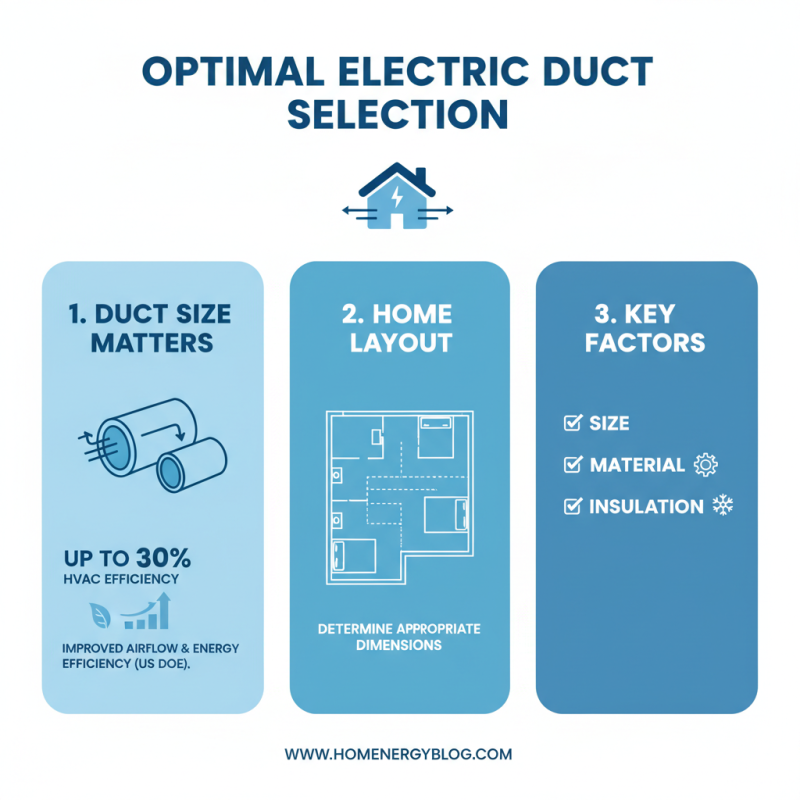
When selecting electric ducts for your home, several key factors should be considered. The size of the ductwork is crucial. Proper sizing affects air flow and energy efficiency. According to the U.S. Department of Energy, correctly sized ducts can improve HVAC efficiency by up to 30%. Understanding your home’s layout will help in determining the appropriate dimension for ducts.
Material choice is another important factor. Common materials include sheet metal, fiberglass, and flexible ducts. Each comes with distinct benefits and drawbacks. For instance, sheet metal ducts are durable but can be expensive. Fiberglass ducts offer insulation but may harbor mold if not maintained. It's essential to weigh these pros and cons based on your budget and long-term goals.
Installation quality cannot be overlooked. Poor installation can lead to air leaks and energy waste. Research shows that improperly installed ducts can lose 20% to 30% of heating and cooling energy. In this sense, hiring a qualified professional is critical. Evaluating these aspects carefully will contribute to making an informed choice for your home.
Types of Electric Ducts: Pros and Cons for Residential Use
Choosing the right electric duct for your home can be challenging. There are various types to consider, each with its pros and cons. Electric ducts are important for maintaining home comfort and efficiency.
Consider flexible ducts. They are easy to install and fit in tight spaces. However, they can lose efficiency over time.
Rigid ducts, on the other hand, are durable and provide better airflow. They require more labor to install. Insulated ducts help in energy savings but can be costly upfront.
Another option is affordable ductless systems. These offer flexibility in installation but may not be suitable for every home. Energy efficiency is often a consideration. Some systems perform well but come with higher maintenance costs. Reflect on your home’s design and future needs. It's beneficial to weigh these factors carefully before making a choice.
Sizing Your Electric Ducts for Optimal Efficiency
When selecting electric ducts for your home, sizing is crucial. An improperly sized duct can lead to inefficiency. If your ducts are too small, they may struggle to distribute air effectively. This results in uneven heating or cooling. On the other hand, oversized ducts can waste energy and increase costs.
Consider the layout of your home. Measure the length and width of each room. Calculate the total airflow needed for each space. This will help determine the appropriate duct size. Insulation is also important. Well-insulated ducts maintain temperature and reduce energy loss.
Remember, many homeowners overlook these details. They might choose ducts based on aesthetics rather than efficiency. Conducting a detailed analysis is essential. Take your time when assessing your needs. A proper sizing plan today will save you trouble tomorrow. In the end, ensuring air quality and comfort should be your primary focus.
Installation and Maintenance Tips for Electric Ducts in Homes
Installing electric ducts can greatly enhance your home's heating and cooling efficiency. Maintenance is crucial for optimal performance. According to a recent report, nearly 40% of energy consumption in homes comes from HVAC systems. Regular check-ups can lower energy bills by up to 30%.
Inspect ducts for leaks regularly. Even small leaks can significantly impact energy usage. Keep an eye on dust and debris buildup, which can restrict airflow. Cleaning ducts every few years can improve efficiency and air quality.
Pay attention to the material and insulation of the ducts. Well-insulated ducts can reduce energy loss by 20%. Remember to assess your home's needs. The wrong size or type of duct can lead to uneven temperatures and wasted energy. The planning phase is as important as installation and requires thoughtful reflection.
Related Posts
-
Ultimate Guide to Innovative Cable Holder Solutions for a Clutter Free Space
-

10 Essential Tips for Choosing the Right Electric Cable Duct Systems
-

2025 Top Trends in Cable Baskets: Essential Guide for Organizing Wires
-
Maximizing Electrical Safety: The Essential Role of Cable Ducts in Modern Infrastructure
-

What is Cable Management? Tips for Organizing Your Wires Effectively
-
10 Essential Tips for Installing Electric Cable Ducts Safely and Effectively