
How to Choose the Best SMA Antenna for Your Needs?
Choosing the right SMA antenna starts with the job it must do, not the shape of its connector. Will it sit inside a metal enclosure, beside a window, or on a moving device? Each setting changes signal performance. Frequency range, gain, polarization, cable length, and mounting clearance all deserve a check. Small details matter.
MarketsandMarkets’ 2023 antenna-market report projected growth from about USD 18.3 billion in 2023 to USD 25.6 billion by 2028. That forecast covers the broader antenna market, not SMA antennas alone. It still signals why careful component selection matters as wireless devices multiply. For technical grounding, Constantine A. Balanis writes in Antenna Theory: Analysis and Design, “An antenna is a transitional structure between free-space and a guiding device.” The principle applies here: an SMA connector cannot compensate for a poorly matched antenna or a lossy cable.
A practical comparison should begin with the device’s operating bands and its 50-ohm system requirements. Then check connector gender, cable type, antenna dimensions, and the manufacturer’s measurement conditions. A higher gain figure is not automatically better; it may narrow coverage or perform differently in a real installation. That part is easy to overlook. This guide will help you weigh specifications against the physical setup, while treating datasheets as evidence—not guarantees. A final check with the device assembled can reveal problems that a product page cannot.
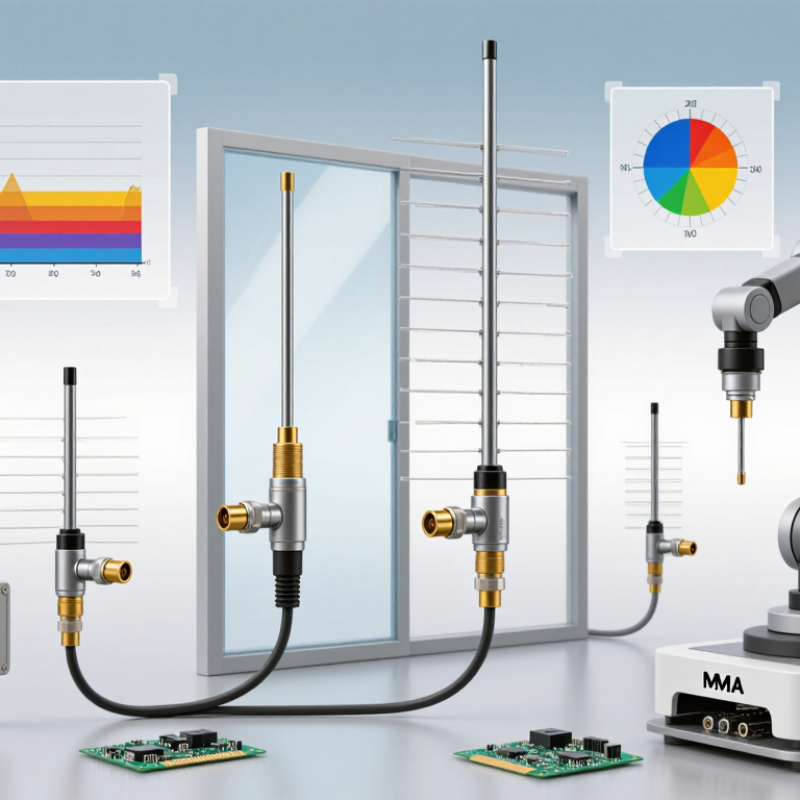
Define Your Application and Performance Requirements
Start by describing the device, its operating frequency, and where the antenna will sit. A handheld sensor beside a metal cabinet faces different conditions from a gateway mounted outdoors. List every frequency band the radio uses. A matching connector does not guarantee a well-tuned antenna. Check the SMA interface and confirm whether the equipment requires standard or reverse polarity. Small details matter. Note the available mounting space, cable length, nearby metal, and exposure to rain or vibration.
Then rank your performance needs. Range, coverage angle, and power efficiency can pull the design in different directions. An omnidirectional model may suit a moving device, while a directional antenna can focus coverage toward a fixed link. Compare the stated frequency range, gain, polarization, and VSWR, but treat catalogue figures as starting points. Installation changes results. A long cable can add signal loss, and a metal enclosure may detune an antenna placed too close. Test the complete assembly in its intended position, if possible. A quick bench test can feel reassuring, yet it may hide installation losses. Record signal strength and stability at the farthest point you need to cover. A compact antenna may be easier to mount, but its performance may not meet expectations in every environment.

Match the Antenna to the Required Frequency Range
Choosing an SMA antenna starts with the frequencies your equipment actually uses. SMA describes the connector, not the antenna’s usable range. Check the datasheet for its specified frequency band, gain, and voltage standing wave ratio (VSWR). A connector that fits can still lead to a poor match. Small detail, big difference.
Use the radio’s exact channel range, not just a label such as “Wi-Fi” or “cellular.” 3GPP TS 38.104, Release 17, defines 5G FR1 as 410 MHz to 7.125 GHz and FR2 as 24.25 to 52.6 GHz. Those wide ranges do not mean one antenna covers them all. For example, a 2.4 GHz antenna may perform badly on a 5 GHz channel, even when the SMA connector fits. Check that the antenna’s stated operating band includes every frequency you plan to use.
For a practical check, compare the radio’s band plan with the antenna’s datasheet, then inspect VSWR across that band. A low VSWR near one channel does not guarantee good performance at the band’s edges. Cable length, nearby metal, and the device’s ground plane can also shift results. A bench measurement with a vector network analyzer can help, though setup errors can mislead. I would verify the actual installation, not only the catalog numbers.
Choose the SMA Connector and Antenna Configuration
Choosing the right SMA antenna starts with the connector, not the antenna’s appearance. Standard SMA and reverse-polarity SMA can look nearly identical, yet their center contacts differ. Check the device manual or inspect the port before ordering. Never force a threaded connection; it should turn smoothly and seat without wobbling. A mismatch can damage the jack. Fit matters.
Next, match the antenna configuration to the radio’s frequency range and installation. A short whip may suit a compact handheld device, while a hinged or external antenna can help when the unit sits behind a metal panel. Keep the antenna clear of batteries, enclosures, and nearby cables where possible. For a fixed installation, confirm cable length and connector gender at both ends. Longer coax can add loss, especially at higher frequencies. More gain is not always better; a directional pattern may improve reception in one location and weaken it elsewhere. Test the antenna in its real position, not only on a desk.
Tips: Verify the rated frequency, 50-ohm system, connector type, and available clearance before purchase. Tighten by hand, then check signal strength in several orientations. Small changes matter. If a specification sheet is unclear, ask for dimensions and connector details before ordering.
Check Installation Space and Environmental Conditions
Before choosing an SMA antenna, measure the actual mounting area, not just the space shown on a drawing. Check its height, length, connector position, and the clearance needed to install it. A low ceiling or nearby metal panel can block signals or alter antenna performance. Small details matter.
Allow room for the cable to bend without sharp kinks. Confirm that the antenna’s connector matches the equipment and that its mounting method suits the surface. Some antennas need a ground plane; others do not. Check the manufacturer’s specifications rather than guessing. It is easy to overlook this requirement when the antenna appears to fit.
Consider the conditions at the installation site. Outdoor exposure, condensation, dust, salt air, and vibration can affect both the antenna and its connection. Check the temperature range and ingress protection rating for the complete installed assembly. A sealed connector alone does not make the setup weatherproof. Use suitable strain relief, and keep water from collecting around the mount. Then test signal performance in its final position. A bench test may not reflect the real environment.
I still find clearance easy to underestimate. A few extra millimeters can change the installation plan.
Compare Specifications and Verify Compatibility with Your Device
How to Choose the Best SMA Antenna for Your Needs?
Compare Specifications and Verify Compatibility with Your Device
A suitable SMA antenna starts with the device’s required frequency range. Check its manual, then compare that range with the antenna’s specifications. A mismatch can weaken reception, even if the connector fits. Also confirm impedance; many devices and antennas use 50 ohms. Don’t assume. Check the details.
Tips: Compare connector gender and polarity, not just the SMA label. Standard SMA and reverse-polarity SMA can look similar but may not mate correctly. Inspect the center contact, or consult the device documentation. Note whether you need a straight or right-angle connector. Small details matter.
Next, consider gain, antenna length, and where you’ll install it. Higher gain is not automatically better; performance depends on the signal environment and antenna placement. A long antenna may be awkward in a compact enclosure, while nearby metal can affect reception. Check any stated operating limits and mounting requirements. If specifications are unclear, pause and verify them with the device maker or a qualified supplier. It’s easy to overlook one detail. That happens.