How to Choose the Right Battery Connector for Your Needs?
Choosing the right Battery Connector can be challenging. The options available are diverse, and each option has unique specifications. Understanding your needs is crucial. A suitable battery connector ensures safe and efficient power transfer. Quality and compatibility play a significant role in your decision.
When selecting a battery connector, consider factors like voltage, current rating, and environmental conditions. These details impact performance greatly. If you overlook these elements, problems may arise. Melting, poor connections, or even short circuits can occur.
Moreover, experience or expert guidance can help. Manufacturers and experts often provide insights and recommendations. Relying on their knowledge can save time and potential issues. Reflecting on past choices can also lead to better decisions. Connectors may seem trivial, yet they are vital to your battery system.
Understanding Different Types of Battery Connectors
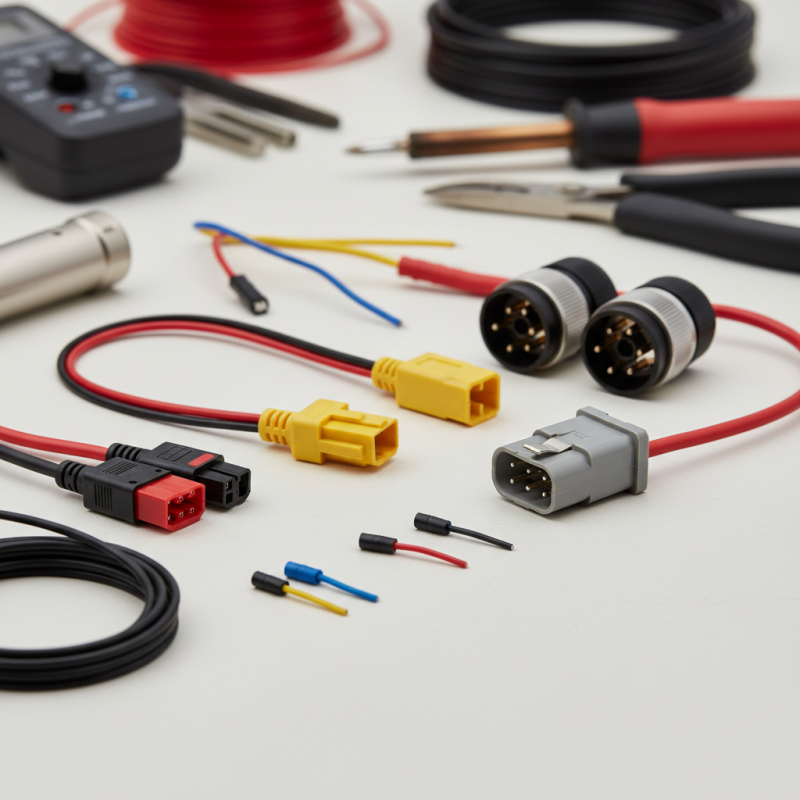
When selecting battery connectors, it is crucial to understand the various available types. Different applications require distinct specifications. Common types include JST, Molex, and Anderson connectors. Each serves specific voltage and current requirements, impacting performance and safety. Industry reports indicate that improper connector choice can lead to significant inefficiencies, with up to 30% energy loss in some setups.
JST connectors are popular in low-power applications, such as remote-controlled devices. Their compact size allows easy integration without adding bulk. Conversely, Anderson connectors are designed for high-current applications. They can handle more than 30 amps, making them ideal for electric vehicles and renewable energy systems. However, users often overlook the importance of contact material. For example, gold-plated contacts provide superior resistance to corrosion but may not be necessary for all applications.
Choosing the right connector isn't always straightforward. Factors such as environmental conditions and mechanical stress play a role. A poorly chosen connector can lead to intermittent connections or complete failures. Reports have highlighted that nearly 10% of electrical failures stem from inadequate connections. Knowledge of these nuances is vital in making an informed decision.
How to Choose the Right Battery Connector for Your Needs?
| Connector Type | Applications | Current Rating | Connector Size | Durability |
| Anderson Powerpole | RC Vehicles, Battery Packs | 15-180A | Various | Very Durable |
| XT60 | Multirotors, Drones | 60A | Medium | Durable |
| Deans (T-Plug) | RC Cars, Boats | 50A | Small | Durable |
| JST Connector | Small Electronics, Batteries | 2-40A | Very Small | Moderate |
| Molex Connector | Computers, Consumer Electronics | Up to 30A | Medium | Moderate |
Evaluating Voltage and Current Requirements for Connectors
When selecting battery connectors, understanding voltage and current requirements is crucial. Different applications demand varying power levels. High-voltage systems typically require connectors that can handle greater stress. Ignoring these needs can lead to overheating or even failure.
Current capacity is another key factor. Connectors must match the current draw of devices. Too low of a current rating can cause significant issues. It risks connector damage and reduces the overall efficiency of your setup. Evaluating your specific requirements is essential.
Take time to assess your power needs. Check the specifications on your components carefully. Look for connectors designed with your voltage and current in mind. A mismatch can hinder performance or create safety risks. Consider future upgrades too; anticipate potential changes in your system. Make informed choices to ensure a reliable connection for your projects.
Battery Connector Voltage and Current Requirements
Assessing Environmental Conditions for Connector Durability
When selecting a battery connector, it’s essential to consider environmental conditions. These factors significantly impact connector durability and performance. For instance, connectors exposed to moisture can corrode quickly. Saltwater environments are especially harsh and can lead to failure. Choose connectors made from corrosion-resistant materials to prolong their lifespan.
Temperature fluctuations also affect connectors. Extreme heat can cause plastic housings to warp, while cold can make them brittle. It’s crucial to select connectors rated for your specific temperature range. Moreover, UV exposure can degrade materials unless they have proper protection. Verify the specifications to ensure they meet environmental needs.
Testing and validation are often overlooked. Real-world conditions can differ from controlled environments. Applying connectors in field tests reveals their true resilience. Reflecting on past decisions can aid future choices. Consider conducting assessments over time, noting performance under various conditions. This approach leads to better, informed selections.
Identifying Compatibility with Battery Types and Specifications
Choosing the right battery connector requires a deep understanding of compatibility. Battery types vary widely in voltage and capacity. Each connector must meet the specifications of the battery it attaches to. According to industry reports, mismatched connectors were a leading cause of system failures in 2022, highlighting the importance of proper selection.
When selecting a connector, consider the battery's voltage rating. For instance, lithium-ion batteries often operate at a nominal voltage of 3.7V, while lead-acid batteries usually sit around 12V. Each battery type demands specific connectors, as using an inappropriate one can lead to overheating or poor performance. Research suggests that over 30% of mechanical failures stem from improper connectors.
Also, the physical dimensions of connectors matter. Some batteries require compact connectors due to space constraints. It’s critical to check the current rating, often specified in amps, to ensure reliable energy transfer. Ignoring these details can lead to significant operational inefficiencies. For example, connectors rated for lower current could potentially cause a voltage drop, impacting device functionality. These factors stress the importance of assessing each connector's specifications before making a choice.
Considering Ease of Use and Installation Factors for Connectors
Choosing the right battery connector requires careful consideration of ease of use and installation factors. Connector design significantly impacts user experience. A straight or horizontal connection is often easier to handle. Users often prefer connectors that minimize the need for additional tools or hardware during installation.
Functionality is key. According to industry reports, connectors with clear labeling and intuitive designs enhance installation efficiency. Many installations take longer than necessary due to unclear instructions or complex designs. Users report that simplified connectors reduce errors and save time. This highlights the importance of intuitive features in product design.
Tips: Always check connector compatibility before purchasing. Consider the space available for installation to avoid future issues. Testing connectors during assembly can help identify potential problems early on. An initial survey indicates that 40% of users overlooked this step, leading to increased frustrations later. Overall, selecting the right connector based on these factors leads to better performance and reliability.