
What Is the Best LED Tunnel Light in 2026?
Choosing the best Led Tunnel Light in 2026 requires more than comparing wattage, price, or advertised lumens. A tunnel is a demanding environment. Dust gathers on lenses, water reaches housings, and drivers face continuous thermal stress. Drivers also confront bright entrances, dark interiors, wet pavement, and sudden glare. The right fixture must protect human vision while maintaining dependable illumination.
The U.S. Department of Energy reports that LED products can use up to 75% less energy and last up to 25 times longer than incandescent lighting. These figures support LED adoption, but tunnel performance requires deeper testing. CIE 88:2004, Guide for the Lighting of Road Tunnels and Underpasses, emphasizes luminance adaptation, uniformity, glare control, and emergency considerations. Those principles remain relevant in 2026. Recent energy-efficiency reporting from the International Energy Agency also reinforces efficient lighting as a practical route toward lower electricity demand.
Numbers can still mislead.
A high-lumen fixture may create uncomfortable contrast near tunnel portals. A cheap IP rating may not reflect long-term sealing quality. A narrow beam may leave dark patches between mounting points. Therefore, this article examines optical distribution, L70 lifetime, surge protection, flicker, color consistency, dimming control, thermal design, and maintenance access. It also considers real installation details, including 24-hour operation, cleaning intervals, cable routing, and replacement difficulty. No single Led Tunnel Light wins every project. That conclusion is less convenient, but more honest. The strongest choice balances safety, measured performance, lifecycle cost, and evidence from credible testing.
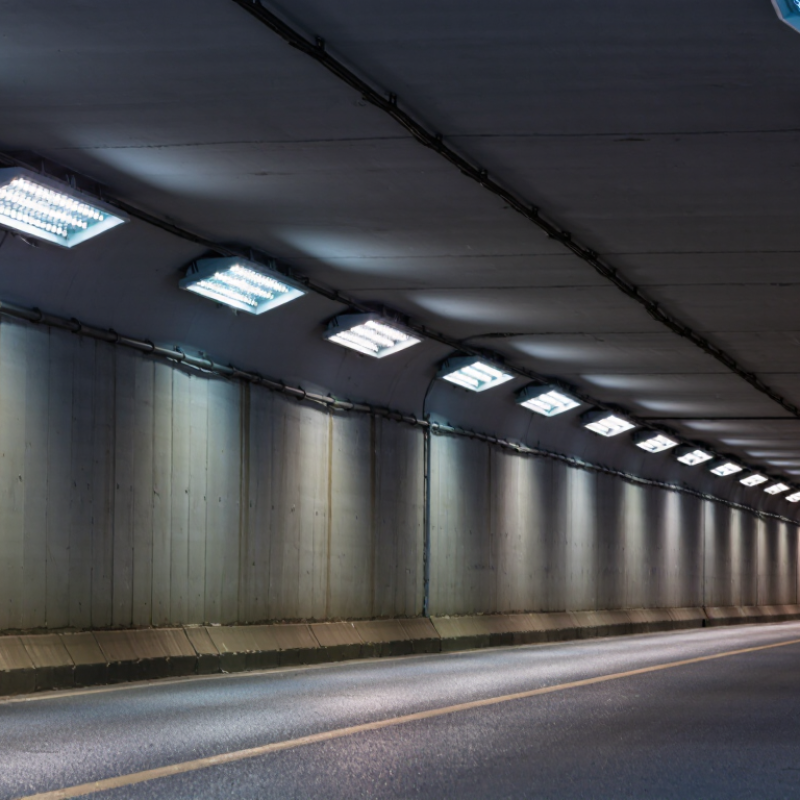
What Defines the Best LED Tunnel Light in 2026?
What Is the Best LED Tunnel Light in 2026?
The best LED tunnel light is not simply the brightest fixture. It must deliver stable luminance, controlled glare, and reliable visibility through dust, spray, and traffic fumes. CIE 88:2004 recommends tunnel lighting designs based on adaptation, road luminance, uniformity, and entrance conditions. These factors matter more than headline wattage.
The U.S. Department of Energy’s 2023 Solid-State Lighting R&D Opportunities report records laboratory LED efficacy above 200 lumens per watt. Installed tunnel fixtures usually achieve less because optics, drivers, heat, and protective housings reduce performance. IEA analysis also places lighting near 15% of global electricity use. Therefore, a strong 2026 design should combine high optical efficiency with dimming, presence detection, and daylight-responsive controls.
Flicker deserves attention too. A light can look comfortable while creating visual discomfort for drivers or maintenance crews. I have seen specifications overlook this practical issue.
Tips: Check maintained luminance, not initial lumens. Ask for LM-80 and TM-21 data, driver lifetime, surge protection, and operating temperature ranges. Confirm IP66 or higher protection, corrosion resistance, and an accessible cleaning plan. Measure uniformity after installation, because drawings cannot predict every tunnel surface. One more detail: compare photometric files under real mounting heights. A narrow beam may appear efficient, yet produce bright patches and dark gaps. The “best” solution is therefore site-specific, verifiable, and slightly less impressive on paper.

Key Performance Standards for Modern LED Tunnel Lighting
What Is the Best LED Tunnel Light in 2026?
The best LED tunnel light must meet performance standards, not just advertise high lumen output. CIE 88:2004 emphasizes adaptation luminance, threshold-zone lighting, uniformity, glare control, and visual guidance. These factors protect drivers when entering a dark tunnel under bright daylight. The U.S. Department of Energy’s 2023 Solid-State Lighting R&D Opportunities report records laboratory LED efficacy above 200 lm/W. However, installed performance is lower after optical losses, heat, dust, and aging. A higher lumen label is not automatically better.
Field inspections often reveal uneven pavement brightness beneath otherwise powerful fixtures. Look for verified photometric files, stable color output, suitable beam distribution, and controlled flicker. Specify an appropriate IP rating and impact resistance for the tunnel environment. Confirm the maintained output, not the initial output. CIE guidance and local road-tunnel standards should define the final lighting calculations, because requirements vary by traffic speed, tunnel length, and emergency design.
Tips: Request a full lighting simulation using real tunnel geometry. Check threshold, interior, exit, and emergency zones separately. Ask for L70 data, thermal test results, and cleaning access. Sensors can reduce daytime energy use, but poor calibration may create distracting brightness changes. That weakness is easy to overlook. Independent commissioning measurements remain essential, even when the design appears technically complete.
What Is the Best LED Tunnel Light in 2026?
Key Performance Standards for Modern LED Tunnel Lighting
Target at least 140 lm/W to reduce energy use while maintaining required illumination.
IP66 protection and IK08 or higher are common targets for dust, water and impact resistance.
A rated L70 life of 100,000 hours supports fewer relamping cycles and lower maintenance costs.
CRI ≥70, controlled glare and low flicker help improve driver visibility and safety.
The chart presents a representative illuminance profile in lux for a modern road tunnel: higher lighting is required at the entrance and transition zones because drivers must adapt from bright outdoor conditions. Final values should be calculated from tunnel geometry, traffic speed, pavement reflectance, weather conditions and the applicable CIE or national road-lighting requirements.
How to Compare LED Tunnel Light Types and Specifications
Choosing the best LED tunnel light in 2026 requires more than comparing lumen numbers. A higher lumen rating can still disappoint. I have seen bright fixtures create dark patches between vehicles. Compare maintained illuminance, beam distribution, and spacing together. Symmetric optics suit straight sections, while asymmetric optics can improve wall and pavement visibility. Continuous linear systems may reduce shadows, but replacement access can be harder.
Check efficacy, power factor, surge protection, and thermal performance. The U.S. Department of Energy’s 2023 Solid-State Lighting R&D Opportunities report identifies over 200 lm/W as a practical white-light development target, yet complete luminaires usually deliver less. Treat catalog values carefully. CIE 88:2019 recommends evaluating tunnel lighting through adaptation, glare, uniformity, and entrance-zone conditions. Useful specifications include IP66 protection, suitable impact resistance, low flicker, and a tested L70 rating. A cool color temperature is not automatically safer. CRI 70 or higher may support clearer signs and vehicle recognition, depending on the tunnel environment.
Tips: Request photometric files, not only brochures. Model the entrance, transition, interior, and exit zones separately. Compare watts per meter at the same maintained lux level. Review measurements after dust, heat, and voltage variation. I would also question “maintenance-free” claims; drivers, seals, and control components can fail earlier than the LEDs. The IEA’s Energy Efficiency 2024 report reinforces the value of efficient lighting, but energy savings depend on controls, dimming schedules, and real operating conditions. Fancy controls are wasted when commissioning is rushed.
Installation, Safety, and Maintenance Requirements
The best LED tunnel light in 2026 is not simply the brightest model. Installation must match tunnel geometry, traffic speed, humidity, and emergency procedures. CIE 88:2019 recommends designing separate threshold, transition, interior, and exit zones. Each zone needs measured luminance, not a guess based on wattage. During commissioning, technicians should check beam alignment with a calibrated lux meter. They should also verify glare, flicker, uniformity, and control response.
Safety begins before energizing the circuit. Workers need lockout procedures, insulated tools, and secure access platforms. Fixtures should suit the tunnel’s dust, water, impact, and corrosion conditions. An IP rating alone is not enough. Cable glands, brackets, thermal spacing, and grounding can fail quietly. Field inspections should record driver temperature, connector torque, emergency-lighting operation, and visible condensation. Small details matter. They are often missed.
Maintenance planning should use operating data, not only calendar dates. The U.S. Department of Energy’s Solid-State Lighting report identifies longer LED life as a major efficiency advantage, but actual life depends on heat and driver stress. The International Energy Agency reports that lighting uses about 15% of global electricity, making avoidable losses significant. Cleaning schedules should reflect soot and salt exposure. Photometric checks can reveal declining output before drivers fail. A perfect specification rarely survives real traffic conditions. That is why acceptance testing should remain open to correction.
Selecting the Right LED Tunnel Light for Different Applications
What Is the Best LED Tunnel Light in 2026?
Selecting the Right LED Tunnel Light for Different Applications
The best LED tunnel light depends on tunnel length, traffic speed, ceiling height, and maintenance access. A road tunnel needs controlled glare and strong entrance-zone illumination. A pedestrian tunnel usually needs softer light and higher visual comfort. Rail tunnels require vibration resistance and dependable emergency operation.
The IEA’s Energy Efficiency 2024 report estimates that lighting consumes about 15% of global electricity. Efficient tunnel lighting therefore matters, but wattage alone cannot decide performance. The U.S. Department of Energy’s 2023 Solid-State Lighting R&D Opportunities report notes that advanced LED packages can exceed 200 lumens per watt. Complete fixtures usually deliver less. That difference is easy to overlook.
For long road tunnels, choose narrow beams, stable drivers, and adaptive dimming. Sensors can reduce output during low traffic periods. For short urban tunnels, wider distribution may reduce dark patches near walls and exits. Check photometric files, glare ratings, surge protection, and IP and impact protection before purchase. CIE 88 guidance also supports designing for entrance, transition, interior, and exit zones. Field testing remains essential. Real tunnels are dusty, humid, and difficult to service. A specification may look perfect on paper, yet fail beside a wet wall. Maintenance time, replacement access, and emergency circuit behavior deserve equal attention. No selection is flawless.
What Is the Best LED Tunnel Light in 2026? Selecting the Right LED Tunnel Light for Different Applications
The best tunnel light depends on traffic conditions, tunnel geometry, environmental exposure, maintenance access, and required lighting performance. The specifications below represent practical selection ranges for modern roadway tunnel projects.
| Application | Recommended LED Light Type | Typical Power Range | Typical Luminous Flux | Recommended CCT | Recommended CRI | Ingress Protection | Operating Temperature | Optical Requirement | Key Selection Priority |
|---|---|---|---|---|---|---|---|---|---|
| Highway Tunnel Entrance Zone | High-output tunnel luminaire | 150–300 W | 22,000–48,000 lm | 4,000–5,700 K | ≥70 | IP66 or higher | −30°C to +50°C | Wide or asymmetric distribution with controlled glare | High daytime illuminance, rapid adaptation, glare control, and reliable dimming |
| Highway Tunnel Interior Zone | Medium-output LED tunnel light | 60–180 W | 9,000–28,000 lm | 4,000–5,000 K | ≥70 | IP66 or higher | −30°C to +50°C | Symmetric or batwing distribution for uniform road luminance | Uniformity, energy efficiency, low maintenance, and compatibility with controls |
| Urban Underpass | Compact low-glare tunnel luminaire | 40–120 W | 5,500–18,000 lm | 3,000–4,000 K | ≥70; ≥80 where pedestrian areas are present | IP65 or higher | −20°C to +45°C | Controlled beam with low upward light spill | Visual comfort, low glare, compact installation, and reduced light pollution |
| Wet or Coastal Tunnel | Corrosion-resistant sealed LED luminaire | 80–200 W | 12,000–32,000 lm | 4,000–5,000 K | ≥70 | IP66/IP67; impact rating typically IK08–IK10 | −30°C to +50°C | Uniform distribution with sealed optical compartment | Water resistance, corrosion protection, impact resistance, and durable cable glands |
| Long Tunnel with Limited Maintenance Access | High-efficiency long-life luminaire | 80–220 W | 12,000–35,000 lm | 4,000–5,000 K | ≥70 | IP66 or higher | −30°C to +50°C | Optics matched to mounting height and lane width | System efficacy, service life, remote monitoring, and accessible driver replacement |
| Rail or Metro Tunnel | Linear or narrow-beam tunnel luminaire | 30–150 W | 4,000–24,000 lm | 3,000–4,000 K | ≥70 | IP65 or higher; impact rating according to project requirements | −20°C to +45°C | Narrow, asymmetric, or linear distribution for track and walkway coverage | Vibration resistance, emergency operation, low glare, and safe evacuation visibility |
| Pedestrian and Emergency Walkway | Low-power safety and walkway luminaire | 10–50 W | 1,200–7,000 lm | 3,000–4,000 K | ≥80 | IP65 or higher | −20°C to +45°C | Wide distribution with minimal dark spots and good vertical illumination | Visibility of steps, signs, handrails, and escape routes |
| Tunnel Maintenance and Service Areas | General-purpose industrial LED luminaire | 30–100 W | 4,000–15,000 lm | 4,000–5,000 K | ≥80 | IP65 or higher | −20°C to +45°C | Wide beam with good color rendering | Workplace visibility, easy cleaning, impact resistance, and simple maintenance |
| Emergency Lighting Operation | Emergency-compatible LED tunnel light | 10–80 W normal operation | 1,500–12,000 lm normal operation | 3,000–5,000 K | ≥70 | IP65 or higher | −20°C to +45°C | Uniform low-level illumination with battery or central emergency supply | Automatic changeover, monitoring, backup duration, and dependable restart performance |
Note: Actual wattage, illuminance, spacing, and optical distribution must be confirmed through a photometric design based on tunnel length, speed limit, traffic volume, road surface, mounting height, lane arrangement, and applicable local lighting standards. LED service-life ratings should also be reviewed using operating temperature and lumen-maintenance data rather than LED chip life alone.