
7 Best Gas Insulated Switchgear Manufacturers
Gas Insulated Switchgear (GIS) is designed for substations where space, reliability, and protection matter. Its sealed, compact construction can help utilities and industrial operators manage equipment in dense urban sites, indoor facilities, and other demanding locations. Yet a small footprint does not make every installation simple.
Details matter. Voltage rating, fault performance, operating environment, maintenance access, and service support all affect long-term suitability. The insulating medium also deserves attention, including its handling requirements and available lower-impact alternatives. Buyers should verify these details against project specifications and current manufacturer documentation.
This guide introduces seven prominent Gas Insulated Switchgear manufacturers and the considerations that can help distinguish their offerings. It is not a universal ranking: the right supplier depends on network conditions, local support, project scope, and lifecycle priorities. A useful comparison looks beyond product brochures to technical data, testing information, installation experience, and after-sales service. Ask how the equipment performs under the site’s actual conditions. Check spare-parts availability and maintenance arrangements before making a decision.
No shortlist is perfect. Specifications change, product ranges vary by region, and a manufacturer’s strengths may not match every project. Treat this overview as a starting point, then confirm claims directly with suppliers and qualified engineering teams. That careful step can turn a promising product comparison into a more dependable procurement decision.
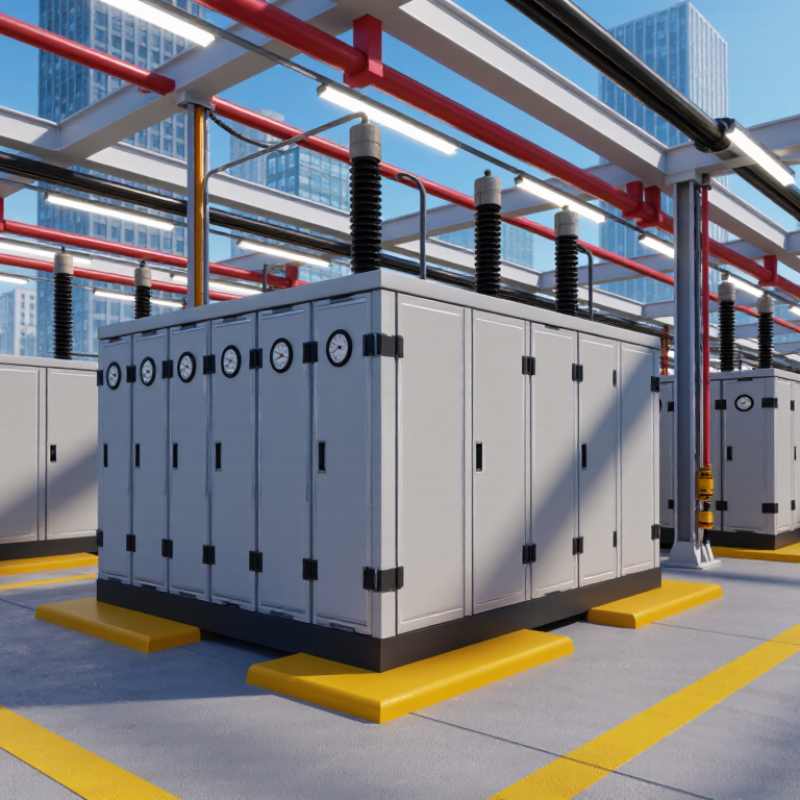
What Gas-Insulated Switchgear Is and How It Works
Gas-insulated switchgear (GIS) encloses high-voltage components inside grounded metal compartments. Instead of relying on open air for insulation, it uses a dielectric gas or another insulating medium. Inside the enclosure, busbars carry power between sections, while circuit breakers control current and isolate faults. Disconnectors and earthing switches support safe maintenance. The arrangement is compact. It can also limit exposure to dust, moisture, and salt.
During normal operation, current flows through the busbars and closed breaker contacts. If a fault occurs, protective relays signal the breaker to open. An arc forms briefly between separating contacts; the interrupting medium helps extinguish it and restore insulation. Sensors monitor conditions such as gas density or pressure, depending on the design. A falling reading can indicate a leak or another issue that needs investigation. Details vary by equipment.
GIS is useful where space is limited, such as dense urban substations or indoor installations. Its sealed construction can reduce routine exposure to environmental contamination, but it does not eliminate maintenance. Technicians still inspect mechanisms, monitor alarms, and follow procedures for handling insulating media. That work matters. A compact enclosure can make access more involved, and a small leak may be easy to miss without monitoring. GIS is not maintenance-free; its reliability depends on sound design, careful installation, and consistent checks.

Key Criteria for Evaluating GIS Manufacturers
Selecting a gas-insulated switchgear manufacturer starts with technical fit, not a glossy catalogue. Confirm that the proposed GIS matches the site’s voltage, short-circuit duty, operating frequency, and installation conditions. Ask for type-test reports that apply to the offered design, rather than relying on broad claims. Review factory quality controls, inspection records, and how design changes are documented. Details matter. Check the gas system closely: identify the insulating medium, leakage monitoring method, pressure alarms, and procedures for recovery or replacement. A small monitoring detail can affect maintenance planning years later.
Assess service capability with practical questions. Are commissioning engineers available near the project site? Can the supplier provide clear maintenance intervals, diagnostic guidance, spare-part lead times, and operator training? Request references for installations with similar climate, access constraints, and duty cycles. A polished brochure can still leave gaps. Compare lifecycle costs, including installation, inspections, outages, and end-of-life handling, rather than purchase price alone. It is easy to overweight price; I would treat that as a warning in any review. Also examine delivery assumptions and warranty exclusions in writing. No scorecard removes judgment: site layout, staff experience, and future expansion can change which manufacturer is the better fit.
Profiles of Seven Leading Gas-Insulated Switchgear Manufacturers
Seven leading gas-insulated switchgear manufacturers can be compared through their engineering strengths, not just product catalogs. One profile may focus on high-voltage transmission bays; another on compact equipment for crowded urban substations. Others stand out through retrofit experience, digital condition monitoring, environmental gas options, local service teams, or delivery of complete substation packages. These distinctions matter in practice. A narrow control-room aisle, for example, can make equipment footprint as important as rated voltage.
The IEA’s 2023 report, Electricity Grids and Secure Energy Transitions, says annual grid investment needs to rise to more than $600 billion by 2030, nearly double current levels. That growth puts pressure on suppliers to deliver reliable equipment and long-term maintenance support. IEC 62271-203:2022 provides a technical reference for gas-insulated metal-enclosed switchgear above 52 kV, but compliance alone does not reveal service quality or retrofit risks. A neat ranking can mislead. Ask how each manufacturer handles spare parts, outage planning, and gas monitoring at the actual site. Small details matter. Even a strong digital dashboard is less useful if technicians cannot access a sensor safely.
Comparing the Manufacturers’ GIS Technologies and Product Ranges
Gas-insulated switchgear manufacturers differ in more than rated voltage. Compare their GIS technologies, product ranges, and support for the conditions at your site. Some offer compact, factory-assembled bays for indoor substations; others provide modular designs suited to outdoor installations or phased expansion. Check the published voltage and current ratings against your load study, not just the product name. Ask how the enclosure, bus arrangement, and connection options affect access and future extensions. Small details matter.
Tips: Request comparable drawings and technical data for each shortlisted system. Check the specified insulating medium, operating temperature range, monitoring options, and maintenance requirements. Confirm that the proposed configuration includes the bays and interfaces your project needs. A broad catalog is useful, but it does not guarantee local service or spare parts. Verify those directly with the supplier.
For a fair comparison, review footprint, installation clearances, factory testing, and documented service procedures. Ask for references from installations with similar voltage, climate, and duty. Be cautious when comparing headline dimensions alone: cable access and replacement routes can change the usable space. A neat catalog can mislead. I would also record unanswered questions beside each proposal; they are easy to overlook during procurement.
7 Best Gas Insulated Switchgear Manufacturers - Comparing the Manufacturers’ GIS Technologies and Product Ranges
Anonymous, technology-based comparison. The entries below describe representative GIS portfolio types, not specific manufacturers or verified product lines. Voltage ranges and insulation options vary by design and market.
| Portfolio profile | Typical voltage range | GIS technology | Typical product range | Common applications | Key comparison point |
|---|---|---|---|---|---|
| 1. Compact distribution GIS | Typically 12–24 kV | Metal-enclosed, sealed compartments; vacuum circuit breakers are common. Insulation may use SF₆ or an SF₆-free medium, depending on design. | Ring main units, compact switchgear panels, feeder and transformer bays | Urban distribution networks, commercial buildings, renewable-energy connections | Small footprint and low maintenance are central design priorities. |
| 2. Medium-voltage GIS | Commonly up to 40.5 kV | Factory-assembled metal-enclosed switchgear with vacuum switching; insulation technology varies across product designs. | Withdrawable or fixed circuit-breaker panels, bus sections, metering and protection bays | Industrial plants, utility substations, mines and infrastructure facilities | Compare panel configuration, internal-arc classification and service access. |
| 3. Subtransmission GIS | Typical ratings include 72.5, להפ145 and להפ170 kV | Gas-insulated bus and switching compartments; SF₆ is established, while alternative insulation options depend on voltage and product availability. | Single- and double-bus arrangements, breaker bays, transformer and line bays | Subtransmission substations and space-constrained urban sites | Bay arrangement and building footprint often drive selection. |
| 4. High-voltage transmission GIS | Common ratings include 145, 245 and להפ300 kV | Compartmentalized gas-insulated conductors and switching equipment; SF₆-based designs remain widely used, with lower-GWP alternatives emerging in some ranges. | Complete substation bays, busbars, circuit breakers, disconnectors and earthing switches | Transmission substations, power plants and grid interconnections | Compare rated short-circuit current, switching duty and tested bay combinations. |
| 5. Extra-high-voltage GIS | Typical ratings include 362, 420 and 550 kV | High-voltage, metal-enclosed GIS with carefully controlled gas compartments and insulation coordination. | Large substation bays, high-current bus systems and line or transformer connections | Major transmission nodes and high-capacity generation connections | Installation planning, transport limits and on-site assembly requirements matter. |
| 6. Ultra-high-voltage GIS | Up to 800 kV in established GIS applications | Specialized high-voltage insulation and switching design, typically supplied as a project-engineered substation solution. | UHV circuit-breaker bays, bus systems and associated substation equipment | Long-distance transmission networks and major grid hubs | Project references, qualification testing and system-level engineering are essential checks. |
| 7. Hybrid GIS portfolio | Available across selected medium- and high-voltage classes | Combines gas-insulated modules with air-insulated components; the exact boundary between GIS and AIS equipment is design-specific. | Hybrid bays integrating functions such as breakers, disconnectors and current transformers | Substation extensions, brownfield upgrades and sites with limited space | Can reduce land requirements while retaining selected air-insulated elements. |
Note: Voltage classes shown are representative industry ratings, not a complete list. Confirm applicable IEC or local standards, rated current, short-circuit performance, insulation medium, environmental requirements and available service support for any specific project.
Applications and Emerging Trends in Gas-Insulated Switchgear
Gas-insulated switchgear (GIS) is used where reliable power control must fit into limited space. In dense cities, enclosed substations can reduce the footprint compared with many air-insulated designs. Their sealed compartments also help protect live components from dust, salt, and changing weather. Space matters.
GIS serves more than urban networks. Industrial plants use it to manage power near production equipment, while renewable-energy projects connect generation to the grid. Offshore platforms and remote sites can benefit from compact layouts, though transport and maintenance access need careful planning. Not every site benefits equally. Engineers weigh available land, operating conditions, safety requirements, and the full service life before choosing a design.
Emerging trends include digital sensors that track temperature, pressure, and switching activity. Condition-monitoring tools can help teams spot unusual changes before they become costly interruptions. Manufacturers are also developing insulating alternatives with lower climate impact, alongside designs that use less gas. The transition is not effortless: new materials require testing, and operators need practical maintenance procedures. Digital data helps, but it is not a substitute for trained inspection. The details still matter.