2026 Top EMT Electrical Connectors for Global Buyers
For global buyers, choosing the right Emt Electrical Connectors is not a minor purchasing decision. It affects installation speed, grounding continuity, enclosure protection, and long-term maintenance. A connector may look sturdy on a product page, yet fail under vibration, moisture, or repeated thermal changes. That detail is easy to overlook.
Dr. Paul G. Slade, a recognized specialist in electrical contact technology, once stated, “The reliability of an electrical contact depends on its stability throughout its service life.” This principle remains highly relevant when comparing 2026 connector options. Buyers should examine material quality, thread accuracy, corrosion resistance, strain relief, and compatibility with the selected conduit system. Product certifications and test reports also deserve careful review. A low unit price can become expensive after field failures, replacements, or delayed commissioning.
Real projects reveal more than catalog claims. Installers often notice whether a connector threads smoothly inside a crowded junction box. They also notice whether the locknut holds firmly after tightening. Small details matter. However, no connector is perfect for every environment. A model suitable for a dry commercial ceiling may be unsuitable for coastal infrastructure or industrial washdown areas. This guide evaluates leading EMT Electrical Connectors for international purchasing teams, focusing on performance, compliance evidence, installation practicality, and supplier reliability. Some comparisons may remain subjective, because regional requirements and project conditions differ. That limitation should be acknowledged, not hidden. Reliable decisions require technical documents, verified samples, and practical installation feedback.
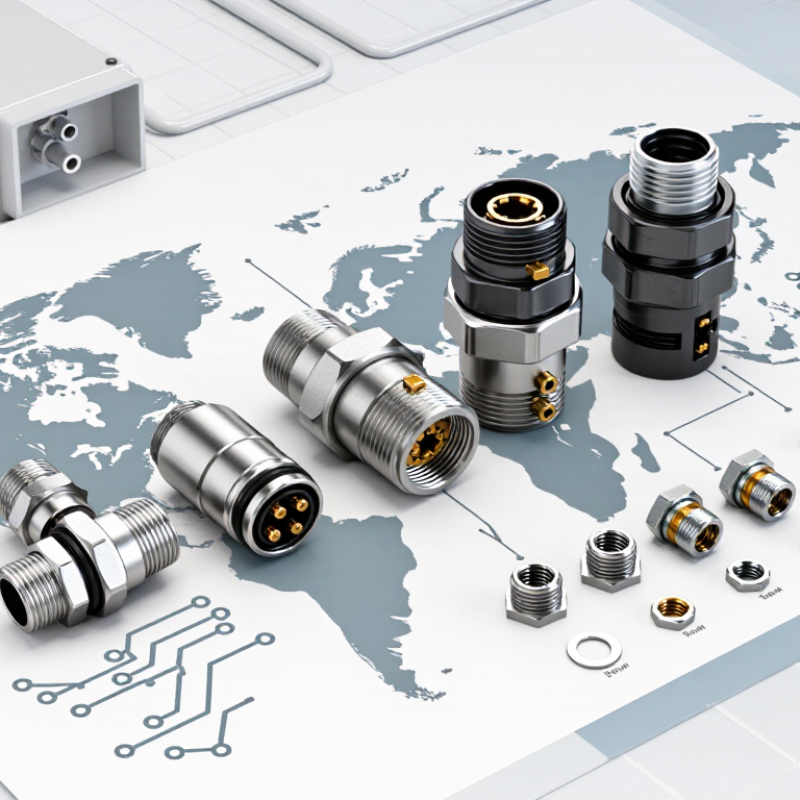
EMT Electrical Connectors: Definition, Purpose, and Core Functions
EMT electrical connectors are fittings that join electrical metallic tubing to boxes, enclosures, or other raceways. They create a stable path for wires and protect conductors from impact, abrasion, and movement. Common designs use set screws or compression mechanisms. Each style suits different installation conditions.
Their core functions are practical. A connector holds the tube firmly, keeps the cable route aligned, and supports grounding continuity across metal sections. Proper engagement also reduces sharp edges that may damage insulation. NFPA 70, the 2023 National Electrical Code, addresses raceway installation, bonding, and fitting security. UL 514B evaluates conduit fittings for mechanical strength and electrical continuity.
Market data shows why these small components deserve attention. MarketsandMarkets estimated the global electrical connectors market at about USD 84.7 billion in 2023, with continued growth expected through 2028. Grand View Research also reports sustained expansion in electrical conduit demand, supported by construction, industrial facilities, and data infrastructure. These figures do not guarantee connector quality. They only show rising application volume.
In field work, buyers should check tube size, material, thread compatibility, corrosion resistance, and listed performance. A low-cost fitting may appear suitable but loosen after vibration or temperature changes. That mistake is easy to overlook. Specification sheets can still be incomplete, and installers should verify local code requirements before purchasing.
Key Connector Types for EMT Conduit Systems
2026 Top EMT Electrical Connectors for Global Buyers
Key Connector Types for EMT Conduit Systems
EMT systems rely on connectors that secure raceways and maintain electrical continuity. Set-screw connectors suit dry indoor spaces with stable conditions. Their two screws create a firm mechanical grip. Compression connectors provide stronger sealing against dust and moisture. They are often preferred in commercial areas, workshops, and exposed installations. Insulated-throat versions protect conductor jackets from sharp metal edges. Couplings join straight EMT sections, while 90-degree connectors guide bends near panels and boxes. Raintight compression fittings deserve attention outdoors.
Small details matter.
The International Energy Agency’s Electricity 2024 report projects global electricity demand growth of about 3.4% annually through 2026. More electrical construction increases demand for dependable conduit hardware. However, market forecasts should not replace installation evidence. A 2024 electrical conduit market analysis by Grand View Research identifies commercial and industrial construction as major demand sectors. Buyers should verify connector dimensions, wall thickness, corrosion resistance, and grounding performance. North American projects commonly reference NFPA 70 and UL 514B requirements. Other regions may follow IEC 61386-based practices. Mixing standards can create avoidable problems. Field inspections still find loose locknuts, incomplete bushings, and poorly matched compression fittings. These failures are simple, but costly. Product documents, sample testing, and installer feedback should guide final selection. No connector type fits every climate, enclosure, or labor method.
Materials, Ratings, and Performance Requirements
Global buyers are specifying EMT connectors more carefully as electrical installations expand. The IEA’s Electricity 2024 report projects global electricity demand growth of about 3.4% annually through 2026. That growth increases demand for dependable raceway fittings in commercial and industrial projects.
Material selection affects service life. Zinc alloy connectors suit dry indoor installations and offer practical strength. Steel provides higher mechanical resistance for exposed or impact-prone areas. Aluminum reduces weight, but installers must check galvanic compatibility. Stainless steel is preferable in humid, coastal, or chemically aggressive environments. It costs more. Sometimes, it is still cheaper than corrosion-related replacement.
Ratings must match the installation, not only the catalog description. NFPA 70, Article 358.42, requires EMT fittings to be listed for EMT use. IEC 60529 defines IP protection levels, including IP54 for limited dust entry and water splashes. NEMA 250 Type 4 applications require dust-tight and watertight enclosures. These ratings are not interchangeable without verification. Buyers should request test records for temperature cycling, pullout strength, torque retention, corrosion exposure, and grounding continuity. IEC 61386-21 also provides relevant conduit-system performance requirements. Field experience shows that loose locknuts remain a common weakness. I would not ignore installation torque. A connector can meet a laboratory rating and still fail after careless assembly. Procurement teams should review certificates, material thickness, thread accuracy, and traceable batch records before approving a 2026 EMT connector.
2026 Top EMT Electrical Connectors for Global Buyers
Material properties commonly considered when selecting EMT connector bodies for strength, weight, heat transfer, and corrosion performance.
Steel
High mechanical strength and impact resistance. Commonly selected for industrial installations where durability is prioritized.
Zinc Die-Cast
Provides a strong balance of rigidity, manufacturability, and cost for general-purpose EMT fittings.
Aluminum
Low density and high thermal conductivity make it suitable where reduced installation weight and heat dissipation matter.
Stainless Steel
Selected for demanding corrosive environments; buyers should verify the alloy grade and applicable certification.
Typical bulk-material reference values: density in g/cm³ and thermal conductivity in W/m·K. Actual connector performance depends on design, thread quality, sealing method, conduit compatibility, environmental exposure, and applicable requirements such as UL 514B, CSA, IEC, or regional conformity rules. Verify the product-specific temperature, corrosion, grounding, ingress, and mechanical ratings before purchase.
How to Select EMT Connectors for Global Projects
2026 Top EMT Electrical Connectors for Global Buyers
Selecting EMT connectors for global projects requires more than matching conduit size. Verify the actual outside diameter, thread type, and wall thickness before ordering. Small dimensional differences can cause loose fittings or damaged threads. Compression connectors suit installations where vibration and consistent clamping matter. Set-screw connectors can work well in dry areas, but their bonding path needs careful inspection.
Material selection also depends on the project environment. Zinc-plated steel may suit ordinary indoor applications. Aluminum or stainless steel can perform better in corrosive or humid locations. Check temperature ratings, impact resistance, and grounding continuity. For wet areas, do not assume a standard EMT connector is liquidtight. Confirm the complete assembly, including seals and enclosures. Local electrical rules may differ, so request test reports, product drawings, and traceability documents from the supplier.
Tips: Build a small sample assembly before placing a large order. Measure the connector with the intended conduit. Test fit, tightening, alignment, and bonding. Keep installation records. A practical field lesson is easy to miss: over-tightening can deform thin conduit and weaken the connection. I would also review the specification twice. A familiar connector is not always the correct connector for a new climate, enclosure, or inspection system.
Installation Standards, Safety Checks, and Maintenance Practices
2026 Top EMT Electrical Connectors for Global Buyers
Installation Standards, Safety Checks, and Maintenance Practices
EMT connectors must match the conduit size, enclosure type, and local electrical code. Requirements vary between countries, so confirm the applicable standard before installation. Use only connectors with clear markings, suitable materials, and documented testing. A qualified electrician should review unfamiliar systems.
Cut conduit squarely and remove sharp edges before fitting the connector. The connector should seat fully, without forcing or cross-threading. Tighten screws to the specified torque, not by guesswork. Over-tightening may damage threads or deform the conduit. Under-tightening can loosen during vibration. Small errors matter.
Bonding deserves careful attention. Check that locknuts, bushings, and bonding parts create a reliable metallic path. Isolate the circuit before work, verify the absence of voltage, and use suitable protective equipment. After installation, inspect alignment, pull gently on each connection, and test continuity with calibrated equipment. Keep it simple.
Maintenance teams should inspect exposed connectors for corrosion, movement, moisture, and damaged threads. Clean contamination with approved methods, then replace weakened parts instead of masking them. Record inspection dates, test results, and corrective actions. A checklist helps, but it can miss poor workmanship hidden inside a crowded enclosure. Periodic review by an experienced inspector remains valuable. Some installations need more frequent checks because heat, vibration, or salt air can accelerate failure.